
Morning Person vs Night Owl: Why Your Miracle Morning Might Be Doomed by Your Genes
In this article
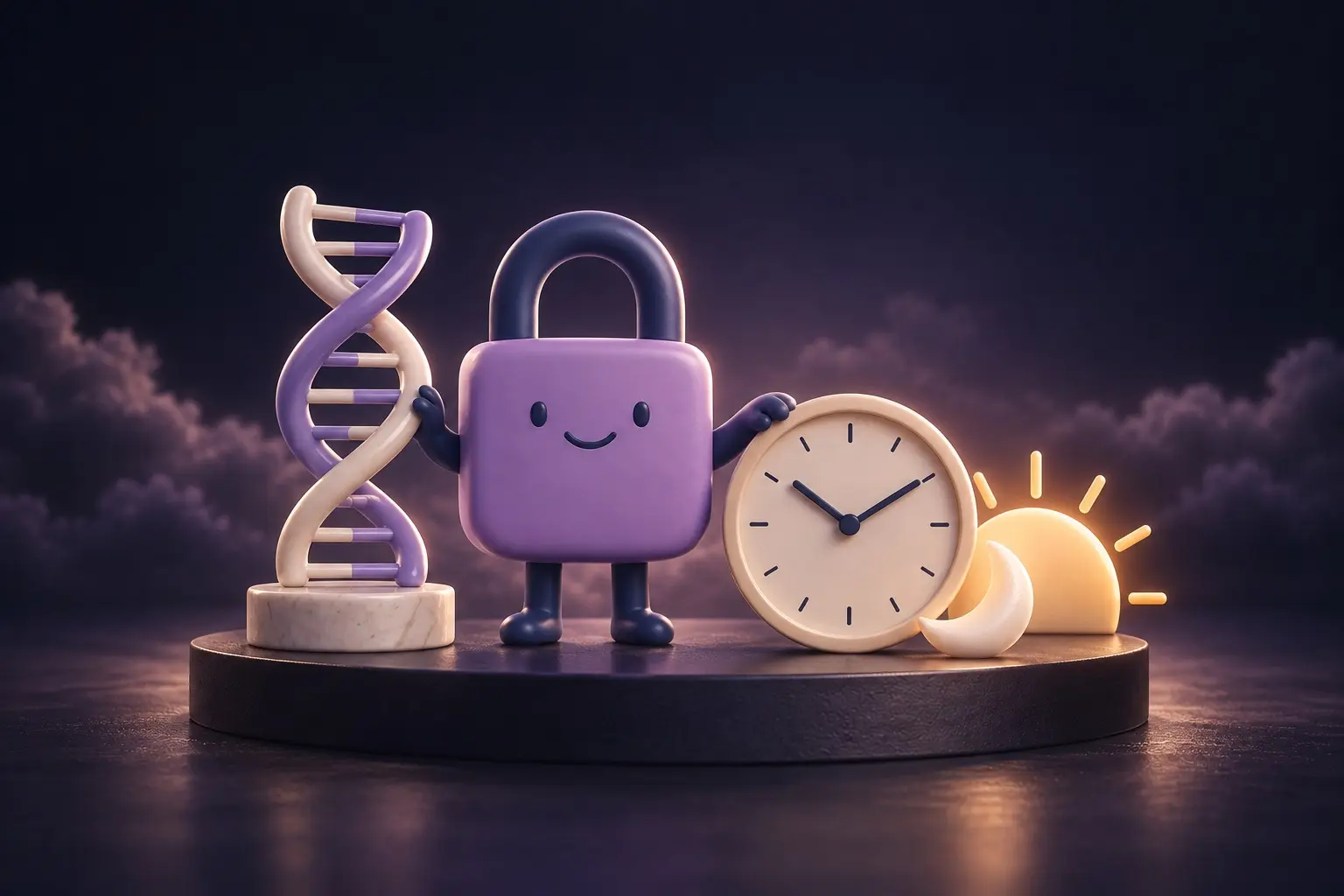
Ever wondered why your friend thrives on a 5 AM wake-up while you feel like death until noon? The answer might be written in your DNA. Welcome to the fascinating world of chronotypes and genetics.
What Are Chronotypes?
Your chronotype is your body's natural preference for when to be awake and asleep. It's not about discipline or willpower—it's biology. Scientists have identified several chronotypes, with the most common being:
Morning Larks (Early Chronotype)
Wake naturally before 6 AM, peak productivity in morning hours, struggle to stay awake past 10 PM
Night Owls (Late Chronotype)
Feel energized in evening, peak creativity after sunset, struggle with early mornings
Intermediate Types
Most people fall somewhere in between, with flexible sleep-wake patterns
Research shows that about 40% of your chronotype is determined by genetics. The rest is influenced by age, environment, and lifestyle.
The Genetics Behind Your Sleep Schedule
Scientists have identified specific genes that influence your chronotype. The most well-studied is the PER3 gene, which comes in two variants:
Key Finding:
People with the longer variant of PER3 tend to be morning types, while those with the shorter variant lean toward evening preference.
Other genes involved include CLOCK, CRY1, and BMAL1. These genes regulate your circadian rhythm—the internal 24-hour clock that controls sleep-wake cycles, hormone release, and body temperature.
A groundbreaking 2019 study analyzed DNA from 697,828 people and identified 351 genetic factors associated with being a morning or evening person. That's right—hundreds of genes influence when you naturally want to sleep.
Why Miracle Morning Fails for Night Owls
The Miracle Morning concept popularized the idea that waking at 5 AM guarantees success. But forcing a night owl to wake early isn't just difficult—it can be harmful.
Chronic Sleep Deprivation
Night owls forced into early schedules often lose 1-2 hours of sleep daily, accumulating massive sleep debt
Decreased Performance
Studies show night owls perform worse on morning tasks when sleep-deprived, despite trying their hardest
Health Consequences
Chronic misalignment with your chronotype increases risks for depression, obesity, and cardiovascular issues
A 2019 study in the journal Sleep found that night owls living on early schedules showed impaired brain connectivity and slower reaction times—even after 10 hours of sleep.
Working With Your Chronotype Instead of Against It
Identify Your Natural Rhythm
Track when you naturally wake on vacation without alarms. This reveals your true chronotype.
Optimize Your Schedule
If possible, schedule important tasks during your peak hours—mornings for larks, evenings for owls.
Gradual Adjustments Only
Can't change jobs? Shift your schedule by 15-30 minutes every few days, not hours at once.
Use Light Strategically
Morning light exposure shifts your clock earlier; evening light exposure shifts it later.
Accept Your Biology
Stop comparing yourself to early risers. Night owls are equally productive—just at different times.
The Truth About Changing Your Chronotype
Can you change from a night owl to a morning person? The answer is complicated: you can shift your schedule somewhat, but you can't fundamentally change your genetic chronotype.
Studies show you can adjust your natural wake time by about 1-2 hours through consistent light exposure, meal timing, and sleep hygiene. But trying to make a 11 PM sleeper into a 10 PM sleeper is much more realistic than forcing them to bed at 9 PM.
The good news? Society is slowly recognizing chronotype diversity. Some progressive companies now offer flexible schedules that accommodate different biological rhythms.
The Bottom Line
Your chronotype isn't a character flaw or lack of discipline—it's biology. The productivity cult that glorifies 5 AM wake-ups ignores decades of sleep science showing that genetic night owls exist and thrive when allowed to follow their natural rhythms.
Instead of forcing yourself into someone else's schedule, honor your biology. Work with your genes, not against them. Your best morning might actually be someone else's afternoon—and that's perfectly okay.
Morning Person vs Night Owl: Everything About Chronotypes
Why do some people wake up at dawn feeling refreshed, while others don't come alive until nightfall? It's not just about habits—it's your 'chronotype,' determined by your genes. From the scientific differences between morning and evening people to finding your optimal daily rhythm, this guide covers everything.
How Irregular Sleep Affects Your Health and How to Fix It
Do you go to bed and wake up at different times every day? Irregular sleep patterns can impact your physical and mental health far beyond just feeling tired. Learn how your body's internal clock works and why consistent sleep timing matters.
Awake Until Dawn? It Could Be Delayed Sleep Phase Syndrome (DSPS)
Do you try to fall asleep every night but can't until 2-3 AM, and then struggle terribly to wake up in the morning? If being a 'night owl' is seriously disrupting your daily life, you might have Delayed Sleep Phase Syndrome (DSPS).
How to Reset Your Sleep Schedule: A Complete Guide to Switching Your Day-Night Cycle
Whether you're recovering from jet lag, adjusting to a new work schedule, or trying to break free from a nocturnal lifestyle, resetting your sleep schedule can feel like a daunting challenge. The good news is that with the right strategies, you can shift your body clock and establish a healthier sleep-wake pattern. This guide explores the science behind circadian rhythms and provides practical steps to help you make the switch.
How to Build a Healthy Circadian Rhythm: The Complete Guide
Your circadian rhythm is your body's biological clock that operates on a roughly 24-hour cycle. It affects nearly every bodily function including sleep-wake cycles, hormone release, and body temperature regulation. Learn how to build and maintain a healthy circadian rhythm.