How Brainwave Entrainment Enhances Deep Sleep
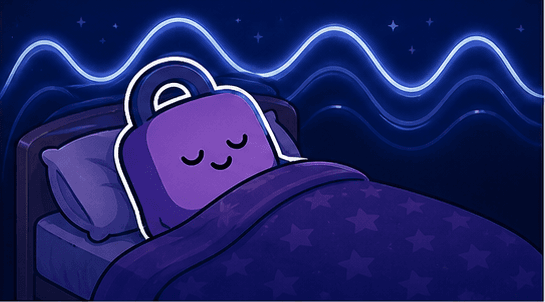
Discover how brainwave entrainment affects deep sleep. Learn about the scientific principles of how specific sound frequencies regulate brainwaves and induce delta waves to improve sleep quality.
What is Brainwave Entrainment?
Brainwave entrainment is a technique that uses external stimuli to guide brainwave frequency to a specific state. Our brain has a natural tendency to synchronize with rhythmic external stimuli.
This phenomenon is based on the 'frequency synchronization' principle discovered by Dutch scientist Christiaan Huygens in 1665. Just as two pendulum clocks hung on the same wall will eventually swing in the same rhythm, our brainwaves can synchronize with external rhythms.
Key Principle
The brain responds to regular external stimuli by adjusting its electrical activity patterns. This allows us to induce desired brainwave states (deep sleep, focus, relaxation, etc.).
The Relationship Between Sleep and Brainwaves
Each stage of sleep has its own unique brainwave pattern.
Beta Waves (14-30Hz)
Waking state. Appears during active thinking and concentration
Alpha Waves (8-14Hz)
Relaxed state. Appears during meditation or rest
Theta Waves (4-8Hz)
Light sleep state. Drowsiness or dreaming state
Delta Waves (0.5-4Hz)
Deep sleep state. Essential for physical recovery and memory consolidation
The Importance of Deep Sleep and Delta Waves
Deep sleep (slow-wave sleep) is the sleep stage dominated by delta waves. During this stage, our body undergoes important recovery processes:
- Growth hormone secretion is most active, enabling cell regeneration and muscle recovery
- The immune system is strengthened, increasing resistance to disease
- Brain waste products (like beta-amyloid) are cleared, protecting cognitive function
- Long-term memory formation and integration of learned content occurs
Studies show that adults need about 15-25% of total sleep time to be deep sleep for optimal recovery.
Types of Brainwave Entrainment
Let's explore the main technologies used for brainwave entrainment.
Binaural Beats
Different frequencies are played to each ear, causing the brain to entrain to the difference. Example: 200Hz in left ear, 203Hz in right ear → Brain perceives 3Hz delta wave
Monaural Beats
Two frequencies are already combined before playback. Headphones are not required and speakers can be effective.
Isochronic Tones
Uses regularly pulsing single tones. Has the strongest brainwave entrainment effect and works well with speakers.
How to Use Brainwave Entrainment for Deep Sleep
Practical tips for effective brainwave entrainment use.
Choose the Right Frequency
For deep sleep, select binaural beats or isochronic tones in the 1-3Hz delta wave range.
Gradual Approach
Don't start with delta waves suddenly. Use programs that gradually decrease from alpha (10Hz) → theta (6Hz) → delta (2Hz).
Create a Comfortable Environment
Listen in a dark, quiet environment in a comfortable position. Set volume low like background music.
Consistent Use
The effects of brainwave entrainment improve with regular use. Try using it consistently for at least 2-4 weeks.
Proper Timing
Start listening 30 minutes before bedtime and play until you fall asleep, or set a sleep timer.
Scientific Research Findings
Research results on brainwave entrainment and sleep.
- 2018 Neuroscience Journal: Delta wave binaural beats increased deep sleep time by an average of 20%
- 2020 Sleep Medicine Study: Groups using brainwave entrainment for 4 weeks showed 15% improvement in sleep efficiency
- 2019 Brain Research: Confirmed isochronic tones are most effective for brainwave synchronization
- 2021 Clinical Study: Brainwave entrainment shortened sleep latency (time to fall asleep) in insomnia patients
Precautions
Things to know when using brainwave entrainment.
- If you have a history of epilepsy or seizures, consult your doctor before use
- Never use while driving or operating machinery
- Stop immediately if you experience headaches or dizziness
- Pacemaker users should exercise caution
First Steps to Deeper Sleep
Brainwave entrainment is a natural, non-invasive way to improve sleep quality. It can be an effective complementary tool, especially for those who feel they lack deep sleep.
However, brainwave entrainment alone won't solve all sleep problems. The best results come when used together with a regular sleep schedule, good sleep environment, and proper screen time management.
⚠️ Important Notice
This article is for informational purposes only and is not a substitute for professional medical advice, diagnosis, or treatment. If you suspect you have a sleep disorder or any health condition, please consult a doctor or sleep specialist.

Take the First Step to Better Sleep
Build healthy sleep habits with Good Night Lock.
Download Good Night LockRelated Articles
Why Is It So Hard to Wake Up in the Morning? Understanding Sleep Inertia
Do you find yourself hitting the snooze button multiple times every morning? Feel like you need an extra hour of sleep no matter how long you slept? You're experiencing sleep inertia - a fascinating phenomenon that affects millions of people worldwide.

Why Alcohol Disrupts Your Sleep (Even Though It Makes You Drowsy)
After a drink or two, you might feel relaxed and sleepy—perfect for bedtime, right? Not quite. While alcohol can make you drowsy initially, it actually sabotages your sleep quality in ways that leave you feeling tired the next day. Let's uncover the science behind alcohol's complex relationship with sleep.
The Napoleon Sleep Method: The Truth About 4-Hour Sleep
Have you heard the story about Napoleon, the great conqueror, who exercised powerful leadership while sleeping only 4 hours a day? Is this sleep method really effective? And did Napoleon actually use this method?

Why Do We Dream So Often? The Science Behind Frequent Dreams
Why do we have vivid dreams on some nights while remembering nothing on others? Let's explore the science of dreams to understand why we dream and how we can enjoy more restful nights.
The Science of Pulling an All-Nighter: How 24 Hours Without Sleep Affects Your Body and Brain
Cramming for an exam, racing against a project deadline, or staying up all night with friends—we've all been there. But what actually happens to your body and brain when you go a full 24 hours without sleep? Let's explore the science behind all-nighters and learn how to handle them when they're truly unavoidable.
Melatonin Side Effects: What to Know About 5mg & 10mg Doses
Melatonin is a natural hormone and popular sleep aid that helps millions get better rest. However, different dosages can come with various side effects. Let's explore how melatonin works, what side effects to watch for at different doses, and how to use it safely.