How Brainwave Entrainment Improves Sleep Quality
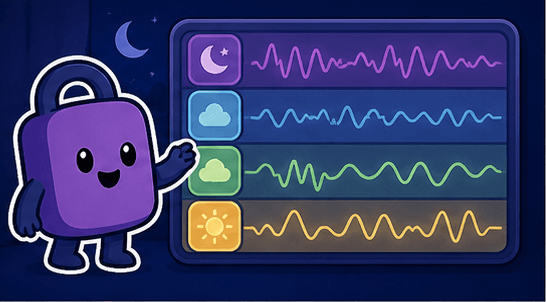
Discover how brainwave entrainment technology enhances sleep quality. Explore scientific research findings and the positive effects on sleep efficiency, memory, and physical recovery.
What is Sleep Quality?
Sleep quality is more than just the duration of sleep. It encompasses various factors including the ratio of deep sleep and REM sleep, sleep continuity, and sleep efficiency.
Good sleep quality means waking up feeling refreshed, experiencing no daytime drowsiness, and having optimized cognitive function and mood.
Key Sleep Quality Indicators
Sleep latency (time to fall asleep), sleep efficiency (percentage of time in bed actually sleeping), number of awakenings during sleep, and deep sleep ratio determine sleep quality.
How Brainwave Entrainment Affects Sleep Quality
Brainwave entrainment technology improves sleep quality in several aspects.
Reduced Sleep Latency
By inducing alpha and theta waves, it transitions the brain to a relaxed state, helping you fall asleep faster.
Increased Deep Sleep
Delta wave entrainment extends the duration of deep sleep stages, enhancing physical recovery and immune function.
Improved Sleep Continuity
Reduces the number of awakenings during sleep, allowing for uninterrupted continuous sleep.
Optimized Sleep Cycles
Facilitates natural sleep cycle transitions, helping maintain appropriate ratios for each sleep stage.
Scientific Research Findings
Various studies have been conducted on brainwave entrainment and sleep quality.
- 2019 Sleep Research Society Journal: Participants using binaural beats showed 26% improvement in subjective sleep quality
- 2020 Clinical Neuroscience Research: Sleep efficiency improved by an average of 18% after 4 weeks of brainwave entrainment
- 2021 Behavioral Sleep Medicine Journal: Insomnia patients showed an average 15-minute reduction in sleep latency
- 2022 Sleep Health Study: Brainwave entrainment group showed 22% increase in deep sleep time compared to control group
These research findings demonstrate that brainwave entrainment can be an effective supplementary tool for improving sleep quality.
Memory and Cognitive Enhancement
Quality sleep directly impacts memory and cognitive function.
- During deep sleep, the brain converts information learned during the day into long-term memory
- REM sleep facilitates creative problem-solving and emotional processing
- Continuous sleep activates the brain's waste removal system (glymphatic system)
- Optimized sleep cycles enhance next-day concentration and learning ability
Physical Recovery and Health Benefits
Improved sleep quality has extensive positive effects on physical health.
Enhanced Immune Function
Immune cells are activated during deep sleep, increasing resistance to infections.
Hormonal Balance
Hormone secretion of growth hormone, cortisol, melatonin, and others is normalized.
Cardiovascular Health
Quality sleep helps regulate blood pressure and maintain heart health.
Improved Metabolism
Insulin sensitivity improves and helps maintain healthy weight.
Effective Usage Methods
Ways to maximize sleep quality with brainwave entrainment.
Use at Consistent Times
Using at the same time daily helps the brain recognize it as a sleep signal, improving effectiveness.
Use Progressive Frequencies
Programs that gradually decrease from beta → alpha → theta → delta are most effective.
Appropriate Volume
Set a comfortable volume that's not too loud. Background music level is appropriate.
Combine with Other Sleep Habits
Best results come when used with regular sleep schedules and proper sleep environments.
Individual Differences and Expected Results
The effects of brainwave entrainment can vary between individuals.
- Some people experience immediate effects, but most feel results after 2-4 weeks of consistent use
- Effects may vary depending on the severity and cause of sleep problems
- Consult a specialist if you have medical sleep disorders
- Brainwave entrainment is a supplementary tool; fundamental sleep hygiene improvement is also necessary
Toward Better Sleep Quality
Brainwave entrainment is one of the scientifically validated methods for improving sleep quality. It shows effects in various aspects including reduced sleep latency, increased deep sleep, and improved sleep continuity.
However, brainwave entrainment alone cannot solve all sleep problems. Best results are achieved when used with regular sleep schedules, proper sleep environments, and healthy lifestyle habits.
⚠️ Important Notice
This article is for informational purposes only and is not a substitute for professional medical advice, diagnosis, or treatment. If you suspect you have a sleep disorder or any health condition, please consult a doctor or sleep specialist.

Take the First Step to Better Sleep
Build healthy sleep habits with Good Night Lock.
Download Good Night LockRelated Articles
Why Is It So Hard to Wake Up in the Morning? Understanding Sleep Inertia
Do you find yourself hitting the snooze button multiple times every morning? Feel like you need an extra hour of sleep no matter how long you slept? You're experiencing sleep inertia - a fascinating phenomenon that affects millions of people worldwide.

Why Alcohol Disrupts Your Sleep (Even Though It Makes You Drowsy)
After a drink or two, you might feel relaxed and sleepy—perfect for bedtime, right? Not quite. While alcohol can make you drowsy initially, it actually sabotages your sleep quality in ways that leave you feeling tired the next day. Let's uncover the science behind alcohol's complex relationship with sleep.
The Napoleon Sleep Method: The Truth About 4-Hour Sleep
Have you heard the story about Napoleon, the great conqueror, who exercised powerful leadership while sleeping only 4 hours a day? Is this sleep method really effective? And did Napoleon actually use this method?

Why Do We Dream So Often? The Science Behind Frequent Dreams
Why do we have vivid dreams on some nights while remembering nothing on others? Let's explore the science of dreams to understand why we dream and how we can enjoy more restful nights.
The Science of Pulling an All-Nighter: How 24 Hours Without Sleep Affects Your Body and Brain
Cramming for an exam, racing against a project deadline, or staying up all night with friends—we've all been there. But what actually happens to your body and brain when you go a full 24 hours without sleep? Let's explore the science behind all-nighters and learn how to handle them when they're truly unavoidable.
Melatonin Side Effects: What to Know About 5mg & 10mg Doses
Melatonin is a natural hormone and popular sleep aid that helps millions get better rest. However, different dosages can come with various side effects. Let's explore how melatonin works, what side effects to watch for at different doses, and how to use it safely.