Complete Guide to Deep Sleep Ratio: Optimal Levels and How to Increase It
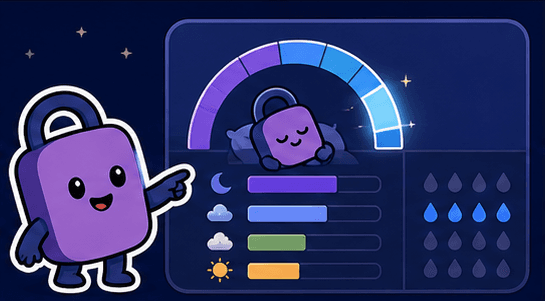
When your smartwatch tells you you got '45 minutes of deep sleep,' do you wonder if that's good or bad? Deep sleep is crucial for physical recovery, but let's explore how much of your total sleep it should occupy and how you can increase it.
What is Deep Sleep?
Deep Sleep is stage N3 of sleep, also called 'Slow Wave Sleep.' It's characterized by slow, high-amplitude delta waves (0.5-4Hz) in brain activity.
During deep sleep, you're very difficult to wake, and if forcefully awakened, you'll experience severe confusion and disorientation (sleep inertia). Heart rate, breathing, and blood pressure reach their lowest levels, and muscles are completely relaxed.
This stage is when growth hormone is released, tissues are repaired, and the immune system is strengthened. Without adequate deep sleep, your body can't recover, leading to accumulated fatigue.
Characteristics of Deep Sleep
The Role of Deep Sleep
Deep sleep is your body's 'recovery time.' What happens during this stage is critical for health.
Physical Recovery
- •Growth hormone release (70-80% of daily secretion)
- •Muscle tissue repair and growth
- •Cell regeneration and repair
- •Energy storage (glycogen replenishment)
Immune Strengthening
- •Immune cell production and activation
- •Cytokine release
- •Enhanced resistance to infections and diseases
Brain Health
- •Brain waste removal (glymphatic system)
- •Beta-amyloid clearance (Alzheimer's-related substance)
- •Declarative memory consolidation (facts, information memory)
Metabolic Regulation
- •Maintain insulin sensitivity
- •Appetite hormone regulation (leptin, ghrelin)
- •Blood sugar control
Effects of Deep Sleep Deprivation
When deep sleep is insufficient: weakened immunity leads to frequent illness, muscle recovery is impaired reducing exercise benefits, fatigue accumulates, and long-term risks of cardiovascular disease, diabetes, obesity, and dementia increase.
Optimal Deep Sleep Ratio
For healthy adults, deep sleep accounts for about 13-23% of total sleep. That's approximately 1-2 hours (60-120 minutes) based on 7-8 hours of sleep.
Deep Sleep Ratio by Age
Age-Related Deep Sleep Decline
Deep sleep naturally decreases with age. Compared to your 20s, it decreases by about 60% in your 40s and 80% in your 70s. This is one reason why older adults feel they 'can't sleep soundly.'
Is My Deep Sleep Normal?
Based on smartwatch measurements, 60-90 minutes of deep sleep is within the normal range. However, device accuracy is limited. 'Do you feel refreshed in the morning?' and 'Are you tired during the day?' are more important indicators.
Deep Sleep Position in Sleep Cycles
Deep sleep is concentrated at specific times during the night. Understanding this pattern helps optimize deep sleep.
Cycle 1 (First 90 minutes)
About 20-30 minutesPeak deep sleep period. Begins about 30 minutes after falling asleep
Cycle 2 (90-180 minutes)
About 15-20 minutesStill substantial deep sleep
Cycle 3 (180-270 minutes)
About 10-15 minutesDeep sleep decreases, REM sleep begins to increase
Cycle 4 and Beyond
About 5 minutes or lessMinimal deep sleep, REM sleep dominant
Key: Early Sleep is Critical
Over 80% of deep sleep occurs in the first 3 hours after falling asleep. Therefore, ensuring early sleep is undisturbed is key to securing deep sleep. Late-night alcohol, snacks, and smartphones reduce early sleep quality.
Signs of Deep Sleep Deficiency
If you experience these symptoms, you may be lacking deep sleep.
Physical Symptoms
- •Tired despite sleeping enough
- •Slow recovery after exercise
- •Frequently ill or prolonged colds
- •Slow wound healing
- •Weight gain tendency
Cognitive Symptoms
- •Reduced concentration
- •Difficulty remembering new information
- •Slower reaction time
- •Impaired judgment
Emotional Symptoms
- •Easily irritated
- •Depression
- •Vulnerable to stress
- •Lack of motivation
How to Increase Deep Sleep
You can't directly control deep sleep, but optimizing your environment and habits can naturally increase it.
Regular Exercise
Exercise is the most effective way to increase deep sleep. Research shows regular aerobic exercise can increase deep sleep by up to 75%.
150+ minutes of moderate-intensity exercise per week, finish 3 hours before bedtime
Cool Bedroom
Your body temperature must drop to enter deep sleep. Maintain bedroom temperature at 18-20°C, and paradoxically, a warm bath/shower 1-2 hours before bed helps (induces rapid temperature drop after bathing).
Bedroom temperature 18-20°C, warm bath before bed
Consistent Sleep Schedule
Going to bed and waking up at the same time daily stabilizes circadian rhythm, optimizing deep sleep timing too.
Keep bedtime/wake time within 1 hour, including weekends
Avoid Alcohol Before Bed
Alcohol is deep sleep's biggest enemy. If you drink, finish at least 4 hours before bedtime.
No alcohol 4 hours before bedtime
Limit Afternoon Caffeine
With a 5-6 hour half-life, caffeine after 2 PM disrupts deep sleep.
Limit caffeine after 2 PM
Complete Darkness
Make your bedroom as dark as possible. Use blackout curtains, sleep masks, or cover LED lights.
Make bedroom completely dark
Avoid Late-Night Eating
Digestion disrupts deep sleep. Finish dinner 3 hours before bedtime.
Finish eating 3 hours before bed
Stress Management
Meditation, breathing exercises, and yoga lower cortisol and promote deep sleep.
Practice relaxing routine before bed
Limit Naps
Long naps (over 30 minutes) reduce nighttime deep sleep need. Keep naps to 20-30 minutes, before 3 PM only.
Naps 20-30 minutes max, before 3 PM
Measuring Deep Sleep
There are various methods to measure deep sleep. Know the pros and cons of each.
Polysomnography (PSG)
Accurately measures deep sleep with EEG. Requires overnight testing in a hospital.
Accuracy: 99%
Smartwatch/Fitness Band
Estimates from heart rate and movement. Research shows deep sleep measurement accuracy is around 60-80%.
Accuracy: 60-80%
Sleep Mat/Sensor
Placed under the bed or on the mattress, measures movement, heart rate, and breathing.
Accuracy: 70-85%
Smartphone App
Detects movement with accelerometer. Use as reference only.
Accuracy: 50-60%
Feeling Matters More Than Measurement
Don't obsess over device measurements. 'Do you feel refreshed in the morning?', 'Are you sleepy during the day?', 'Do you have enough energy?' are the best indicators of adequate deep sleep.
Frequently Asked Questions (FAQ)
Is it a problem if my smartwatch shows low deep sleep?
Smartwatch deep sleep measurements aren't 100% accurate. If it shows over 30 minutes, there's no need to worry. If you feel refreshed in the morning and not sleepy during the day, your deep sleep is adequate.
Which is more important: deep sleep or REM sleep?
Both are important but serve different roles. Deep sleep is crucial for physical recovery, while REM sleep is essential for mental/emotional recovery. Balanced sleep is best.
Can I prevent deep sleep reduction with age?
You can't completely prevent it, but you can minimize it. Regular exercise, consistent sleep schedule, cool bedroom, and limiting alcohol/caffeine help.
Is too much deep sleep a problem?
This is rare. Abnormally high deep sleep may indicate sleep debt or medication effects. If it persists, consult a healthcare provider.
Can naps compensate for deep sleep?
Possible but use caution. Naps over 90 minutes can reach deep sleep but may disrupt nighttime sleep. Short naps (20-30 minutes) are mostly light sleep.
Conclusion: Deep Sleep, Your Body's Recharge Time
Deep sleep is when your body repairs and recharges itself. Adults need 60-90 minutes of deep sleep per night, mostly concentrated in the first 3 hours after falling asleep.
To increase deep sleep: exercise regularly, keep your bedroom cool, reduce alcohol and caffeine, and maintain a consistent sleep schedule.
Don't obsess over smartwatch numbers; use 'Do you feel refreshed in the morning?' as your benchmark. A refreshed morning is the best evidence of adequate deep sleep.
Tonight, recharge your energy for tomorrow with deep sleep. 💙
⚠️ Important Notice
This article is for informational purposes only and is not a substitute for professional medical advice, diagnosis, or treatment. If you suspect you have a sleep disorder or any health condition, please consult a doctor or sleep specialist.

Take the First Step to Better Sleep
Build healthy sleep habits with Good Night Lock.
Download Good Night LockRelated Articles
Why Is It So Hard to Wake Up in the Morning? Understanding Sleep Inertia
Do you find yourself hitting the snooze button multiple times every morning? Feel like you need an extra hour of sleep no matter how long you slept? You're experiencing sleep inertia - a fascinating phenomenon that affects millions of people worldwide.
Why Alcohol Disrupts Your Sleep (Even Though It Makes You Drowsy)
After a drink or two, you might feel relaxed and sleepy—perfect for bedtime, right? Not quite. While alcohol can make you drowsy initially, it actually sabotages your sleep quality in ways that leave you feeling tired the next day. Let's uncover the science behind alcohol's complex relationship with sleep.
The Napoleon Sleep Method: The Truth About 4-Hour Sleep
Have you heard the story about Napoleon, the great conqueror, who exercised powerful leadership while sleeping only 4 hours a day? Is this sleep method really effective? And did Napoleon actually use this method?

Why Do We Dream So Often? The Science Behind Frequent Dreams
Why do we have vivid dreams on some nights while remembering nothing on others? Let's explore the science of dreams to understand why we dream and how we can enjoy more restful nights.
The Science of Pulling an All-Nighter: How 24 Hours Without Sleep Affects Your Body and Brain
Cramming for an exam, racing against a project deadline, or staying up all night with friends—we've all been there. But what actually happens to your body and brain when you go a full 24 hours without sleep? Let's explore the science behind all-nighters and learn how to handle them when they're truly unavoidable.
Melatonin Side Effects: What to Know About 5mg & 10mg Doses
Melatonin is a natural hormone and popular sleep aid that helps millions get better rest. However, different dosages can come with various side effects. Let's explore how melatonin works, what side effects to watch for at different doses, and how to use it safely.