Night Owls and Weight Gain: The Science Behind Reversed Sleep Schedules
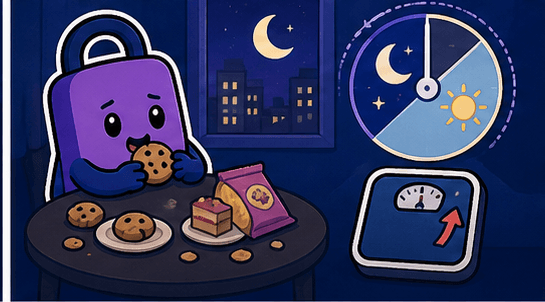
Are you living with a reversed sleep schedule due to late-night work, studying, or smartphone use? Learn how irregular sleep patterns are scientifically linked to weight gain, and discover sleep habits for healthy weight management.
The Science Behind Night Owl Weight Gain
When our body's internal clock is disrupted, various metabolic changes occur.
Decreased Leptin
Sleep deprivation lowers leptin, the hormone that makes you feel full. You'll feel less satisfied and tend to overeat.
Increased Ghrelin
Conversely, ghrelin, the hunger hormone, increases. You'll crave high-calorie, high-carb foods especially.
Insulin Resistance
Irregular sleep reduces insulin sensitivity. Poor blood sugar control makes fat storage easier.
Elevated Cortisol
Staying up late increases cortisol, the stress hormone. This particularly promotes abdominal fat storage.
Eating Habits of Night Owls
People who are active at night face higher weight gain risks from their eating patterns.
Late-Night Eating
Staying up late leads to late-night snacking. Calories consumed at night are more easily stored as fat due to slower metabolism.
Irregular Meals
Skipping breakfast and binge eating at night lowers metabolic rate and causes weight gain.
Junk Food Preference
When sleep-deprived, you crave sweet and fatty foods more than healthy options.
Emotional Eating
Fatigue and stress lead to emotional eating, seeking comfort in food.
Impact on Metabolism
Disrupted circadian rhythm also affects how our body burns energy.
Reduced Basal Metabolic Rate
Sleep deprivation can lower basal metabolic rate by up to 20%. You'll gain weight eating the same amount.
Decreased Fat Burning
Staying up at night reduces fat-burning efficiency. The ability to burn fat instead of carbs decreases.
Muscle Loss
Irregular sleep interferes with muscle recovery and growth. Less muscle means lower metabolic rate.
Reduced Thermogenesis
The thermic effect of food (calories burned during digestion) also decreases with sleep deprivation.
Sleep Habits for Healthy Weight
Regular sleep is essential for weight management.
Maintain Consistent Sleep Times
Go to bed and wake up at the same time daily. Keep weekend variations within 1 hour.
Get 7-9 Hours of Sleep
Adults need 7-9 hours of sleep daily. Adequate sleep is essential for hormone balance.
Avoid Late-Night Eating
Stop eating 3 hours before bed. If you must eat, choose light protein-based foods.
Block Blue Light
Reduce smartphone and computer use 1-2 hours before bed. Blue light disrupts sleep hormone production.
Resetting Your Circadian Rhythm
Learn how to reset your disrupted body clock.
Get Morning Sunlight
Expose yourself to sunlight within 30 minutes of waking. Morning light is the most effective way to reset your body clock.
Gradual Adjustment
Don't try to change all at once. Move your bedtime earlier by 15-30 minutes each day.
Regular Meals
Keep meal times consistent. Regular eating helps regulate your circadian rhythm.
Avoid Evening Exercise
Avoid vigorous exercise within 3 hours of bedtime. Light stretching instead can help with sleep.
Sleep Tips for Weight Management
- •Maintain a regular sleep schedule, going to bed and waking at the same time
- •Keep your bedroom dark and cool
- •Avoid caffeine after 2 PM
- •Have light dinners and skip late-night snacks
- •Try meditation or reading before bed for stress management
Warnings
- •Consult a doctor for rapid weight gain or loss
- •Don't rely on sleep medications. Lifestyle changes should come first
- •Extreme diets can reduce sleep quality
- •Persistent sleep disorders require professional consultation
- •Sudden lifestyle changes can cause additional stress
Conclusion: Good Sleep Is the Start of Healthy Weight
A reversed sleep schedule leads to weight gain through hormonal imbalance, reduced metabolic rate, and unhealthy eating habits. Regular sleep is not just about recovering from fatigue—it's a key factor in weight management.
Start fixing your body clock today and build regular sleep habits. With adequate sleep, you can regain healthy weight and vitality.
⚠️ Important Notice
This article is for informational purposes only and is not a substitute for professional medical advice, diagnosis, or treatment. If you suspect you have a sleep disorder or any health condition, please consult a doctor or sleep specialist.

Take the First Step to Better Sleep
Build healthy sleep habits with Good Night Lock.
Download Good Night Lock