Pillow Height: How It Affects Your Sleep Quality
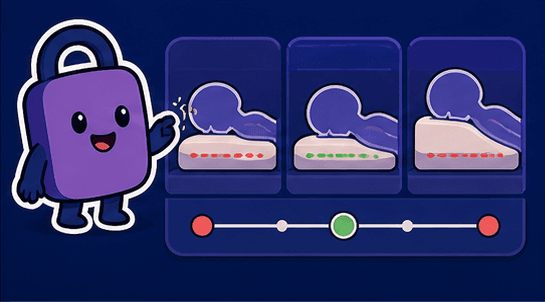
Is your pillow too high? Too low? The height of your pillow might seem like a minor detail, but it plays a crucial role in sleep quality, neck health, and overall well-being. Let's explore the science behind pillow height and how to find your perfect match.
Why Pillow Height Matters
Your pillow's primary job is to keep your head, neck, and spine in neutral alignment—the same natural posture as standing upright. When your pillow is too high or too low, it forces your cervical spine out of alignment, leading to muscle strain, poor circulation, and disrupted sleep.
A 2019 study in the Journal of Chiropractic Medicine found that pillow height significantly affects cervical spine alignment and sleep quality, with improper height being a leading cause of neck pain.
The Golden Rule:
Your pillow should keep your spine in a neutral position—meaning your neck and head should form a straight line with your spine when viewed from the side.
The Goldilocks Principle: Not Too High, Not Too Low
articlePillowHeight.section2.paragraph
articlePillowHeight.section2.effects.effect1.title
articlePillowHeight.section2.effects.effect1.description
articlePillowHeight.section2.effects.effect2.title
articlePillowHeight.section2.effects.effect2.description
articlePillowHeight.section2.effects.effect3.title
articlePillowHeight.section2.effects.effect3.description
articlePillowHeight.section2.effects.effect4.title
articlePillowHeight.section2.effects.effect4.description
The Goldilocks Principle: Not Too High, Not Too Low
Pillow height is not one-size-fits-all—it depends on your sleep position, shoulder width, mattress firmness, and personal comfort. The goal is to keep your spine in neutral alignment.
A 2021 study in the Journal of Chiropractic Medicine found that pillow height significantly affects cervical spine alignment, with improper height leading to increased neck pain and reduced sleep quality.
Back Sleepers
Medium-height pillow to maintain natural cervical curve without pushing head too far forward
articlePillowHeight.section2.positions.back.tip
Side Sleepers
4-6 inches tall to fill the space between your shoulder and head, keeping spine aligned
articlePillowHeight.section2.positions.side.tip
Stomach Sleepers
Very thin pillow (2-3 inches) or no pillow to avoid neck hyperextension
articlePillowHeight.section2.positions.stomach.tip
Combination Sleepers
Medium height (3-4 inches) that works for multiple positions
articlePillowHeight.section2.positions.combo.tip
Scientific Evidence and Studies
articlePillowHeight.section7.mistakes.mistake1.title
articlePillowHeight.section7.mistakes.mistake1.description
articlePillowHeight.section7.mistakes.mistake2.title
articlePillowHeight.section7.mistakes.mistake2.description
articlePillowHeight.section7.mistakes.mistake3.title
articlePillowHeight.section7.mistakes.mistake3.description
articlePillowHeight.section7.mistakes.mistake4.title
articlePillowHeight.section7.mistakes.mistake4.description
Scientific Evidence and Studies
Multiple peer-reviewed studies support the effectiveness of cervical pillows. A 2019 study in the Archives of Physical Medicine found that participants using cervical pillows experienced 36% reduction in neck pain after 3 weeks compared to standard pillows.
Another study in the Journal of Chiropractic Medicine showed that cervical pillows improved both sleep quality and cervical spine alignment on radiographic imaging.
Key Research Findings
- •Cervical pillows reduce neck pain intensity by 30-50% after 4 weeks of use
- •Improved sleep quality scores in 78% of users with chronic neck pain
- •Reduced morning stiffness and improved range of motion
- •Decreased frequency of tension headaches in regular users
articlePillowHeight.conclusion.title
articlePillowHeight.conclusion.paragraph1
articlePillowHeight.conclusion.paragraph2
⚠️ Important Notice
This article is for informational purposes only and is not a substitute for professional medical advice, diagnosis, or treatment. If you suspect you have a sleep disorder or any health condition, please consult a doctor or sleep specialist.

Take the First Step to Better Sleep
Build healthy sleep habits with Good Night Lock.
Download Good Night LockRelated Articles
Why Is It So Hard to Wake Up in the Morning? Understanding Sleep Inertia
Do you find yourself hitting the snooze button multiple times every morning? Feel like you need an extra hour of sleep no matter how long you slept? You're experiencing sleep inertia - a fascinating phenomenon that affects millions of people worldwide.
Why Alcohol Disrupts Your Sleep (Even Though It Makes You Drowsy)
After a drink or two, you might feel relaxed and sleepy—perfect for bedtime, right? Not quite. While alcohol can make you drowsy initially, it actually sabotages your sleep quality in ways that leave you feeling tired the next day. Let's uncover the science behind alcohol's complex relationship with sleep.
The Napoleon Sleep Method: The Truth About 4-Hour Sleep
Have you heard the story about Napoleon, the great conqueror, who exercised powerful leadership while sleeping only 4 hours a day? Is this sleep method really effective? And did Napoleon actually use this method?

Why Do We Dream So Often? The Science Behind Frequent Dreams
Why do we have vivid dreams on some nights while remembering nothing on others? Let's explore the science of dreams to understand why we dream and how we can enjoy more restful nights.
The Science of Pulling an All-Nighter: How 24 Hours Without Sleep Affects Your Body and Brain
Cramming for an exam, racing against a project deadline, or staying up all night with friends—we've all been there. But what actually happens to your body and brain when you go a full 24 hours without sleep? Let's explore the science behind all-nighters and learn how to handle them when they're truly unavoidable.
Melatonin Side Effects: What to Know About 5mg & 10mg Doses
Melatonin is a natural hormone and popular sleep aid that helps millions get better rest. However, different dosages can come with various side effects. Let's explore how melatonin works, what side effects to watch for at different doses, and how to use it safely.