Complete Guide to REM Sleep Duration: Optimal Time and How to Increase It
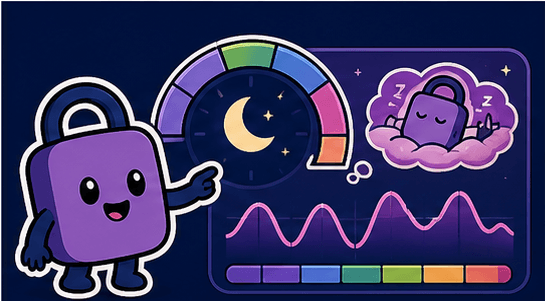
Why do you always feel tired even when you get enough sleep? Is dreaming a lot good or bad? The answer lies in 'REM sleep.' Let's explore the optimal duration of REM sleep—the stage when your brain is most active—and scientifically proven methods to increase it.
What is REM Sleep?
REM Sleep stands for 'Rapid Eye Movement,' referring to the sleep stage where your eyes move rapidly. First discovered by researchers at the University of Chicago in 1953, REM sleep accounts for approximately 20-25% of total sleep.
During REM sleep, our brain is as active as when we're awake. Most vivid dreams occur during this stage, learned information is stored as long-term memory, and emotions are processed.
Interestingly, during REM sleep, the body becomes temporarily paralyzed. This is called 'sleep atonia,' a protective mechanism that prevents us from physically acting out our dreams.
Characteristics of REM Sleep
Why is REM Sleep Important?
REM sleep is not simply 'dreaming time.' It's an essential stage that performs several critical functions for the brain and body.
Memory and Learning
During REM sleep, information learned during the day is converted into long-term memory. It's particularly crucial for consolidating procedural memory (motor skills, musical instruments, etc.) and emotional memories. Studies show that students with sufficient REM sleep scored 20% higher on tests.
Emotional Processing
During REM sleep, the amygdala (emotional center) of the brain becomes activated to process emotional experiences. The stress hormone norepinephrine is barely secreted during this stage, allowing emotional memories to be 'safely' reprocessed.
Creativity and Problem-Solving
During REM sleep, the brain connects seemingly unrelated information. Many scientific discoveries, like Kekulé's discovery of the benzene structure in a dream, occurred during REM sleep.
Brain Development
Newborns spend 50% of their sleep in REM, highlighting its critical role in brain development. Neural connections are formed and strengthened during this stage.
Effects of REM Sleep Deprivation
REM sleep deficiency leads to reduced concentration, emotional regulation difficulties, memory problems, increased depression, and decreased creativity. Chronic REM sleep deprivation increases the risk of mental health problems.
Optimal REM Sleep Duration by Age
The optimal REM sleep duration varies significantly with age. Knowing the percentage of REM sleep in total sleep can help you calculate your needed REM sleep time.
Optimal REM Sleep for Adults
Adults need 90-120 minutes of REM sleep per night. This represents approximately 20-25% of total sleep based on 7-8 hours. REM sleep is concentrated in the later half of 4-5 sleep cycles.
Sleep Cycles and REM Sleep Timing
Sleep repeats in 90-minute cycles, with the proportion of REM sleep varying in each cycle. Understanding this pattern can help optimize your REM sleep.
Cycle 1 (First 90 minutes)
REM sleep about 5-10 minutesDominated by deep sleep (slow-wave sleep). REM sleep is brief
Cycle 2 (90-180 minutes)
REM sleep about 10-15 minutesStill mostly deep sleep, but REM sleep increases slightly
Cycle 3 (180-270 minutes)
REM sleep about 15-20 minutesDeep sleep decreases and REM sleep increases
Cycle 4 (270-360 minutes)
REM sleep about 20-30 minutesREM sleep significantly increases
Cycle 5 (360-450 minutes)
REM sleep about 30-40 minutesLongest and most intense REM sleep. Most vivid dreams occur here
The Problem with Early Wake-Up
Sleeping only 6 hours means missing the last REM sleep cycle. Losing the 30-40 minutes of REM in cycle 5 means losing over 30% of total REM sleep. This is why 'I can get by with less sleep' is a misconception.
Signs of REM Sleep Deficiency
If you experience the following symptoms, you may be REM sleep deficient. Especially if you have these symptoms despite sleeping enough, there's likely an issue with sleep quality.
Cognitive Decline
- •Reduced concentration and distraction
- •Difficulty learning new things
- •Poor recall of yesterday's events
- •Lack of creative ideas
Emotional Issues
- •Easily irritated and sensitive
- •Overreacting to small things
- •Increased depression or anxiety
- •Difficulty managing stress
Physical Symptoms
- •Daytime drowsiness
- •Not feeling refreshed in the morning
- •Weakened immunity (frequent minor illnesses)
- •Difficulty controlling appetite
Scientific Methods to Increase REM Sleep
While you can't directly control REM sleep, improving your sleep environment and habits can naturally optimize REM sleep.
Ensure Sufficient Sleep Duration
REM sleep is concentrated in the later half of the night. Aim for 7-8 hours of sleep. Sleeping less than 6 hours means missing the longest REM sleep cycle.
Calculate and set your bedtime to achieve 7-8 hours of sleep daily
Consistent Sleep Schedule
Going to bed and waking up at the same time daily stabilizes circadian rhythm and optimizes REM sleep timing. Keep weekday/weekend difference within 1 hour.
Maintain weekday/weekend wake time difference within 1 hour
No Alcohol Before Bed
Alcohol is REM sleep's greatest enemy. If you must drink, only moderate amounts and at least 4 hours before bedtime.
Avoid alcohol 4 hours before bedtime
Afternoon Caffeine Restriction
Considering caffeine's half-life, avoid coffee, tea, and energy drinks after 2 PM (or 3 PM at the latest).
Stop caffeine intake after 2 PM
Appropriate Sleep Temperature
Temperature regulation becomes difficult during REM sleep. A cool environment (18-20°C) is favorable for REM sleep.
Maintain bedroom temperature at 18-20°C
Stress Management
Reducing stress before bed through meditation, breathing exercises, or warm baths improves REM sleep quality.
Create a relaxing routine 30 minutes before bed
Regular Exercise
Regular aerobic exercise improves overall sleep quality and REM sleep. However, avoid intense exercise within 3 hours of bedtime.
Exercise at moderate intensity for 150+ minutes per week
Myths and Facts About REM Sleep
Does dreaming a lot mean poor sleep?
No. Remembering dreams may indicate sufficient REM sleep and naturally waking at the end of a REM cycle. However, if you frequently wake from nightmares, there may be an issue with sleep quality.
Is only REM sleep important and other stages less important?
No. Deep sleep (slow-wave sleep) is also essential for physical recovery, immune strengthening, and growth hormone secretion. All sleep stages have their roles, and balance is crucial.
Can naps supplement REM sleep?
20-30 minute naps are mostly light sleep. Reaching REM sleep requires about 90 minutes. However, long naps can disrupt nighttime sleep, so caution is needed.
Is too much REM sleep also problematic?
If REM sleep percentage is abnormally high (over 30%), it may signal conditions like depression or narcolepsy. Balanced sleep architecture is healthy sleep.
Why do seniors have less REM sleep?
As we age, sleep architecture changes. Both deep sleep and REM sleep decrease, sleep becomes lighter, and awakenings become more frequent. This is normal aging, but good sleep habits can minimize the decline.
Conclusion: REM Sleep, The Brain's Charging Time
REM sleep is not simply dreaming time. It's the brain's critical charging time for organizing memories, processing emotions, and fostering creativity.
Adults need 90-120 minutes of REM sleep per night, which requires at least 7-8 hours of total sleep. Since REM sleep is concentrated in the later half of the night, thinking 'I can get by with a little less sleep' is dangerous.
Start today: Set a consistent bedtime, reduce alcohol and caffeine, and ensure sufficient sleep duration. Your brain will thank you.
Tonight, recharge tomorrow's creativity and memory with sufficient REM sleep. 💙
⚠️ Important Notice
This article is for informational purposes only and is not a substitute for professional medical advice, diagnosis, or treatment. If you suspect you have a sleep disorder or any health condition, please consult a doctor or sleep specialist.

Take the First Step to Better Sleep
Build healthy sleep habits with Good Night Lock.
Download Good Night LockRelated Articles
Why Is It So Hard to Wake Up in the Morning? Understanding Sleep Inertia
Do you find yourself hitting the snooze button multiple times every morning? Feel like you need an extra hour of sleep no matter how long you slept? You're experiencing sleep inertia - a fascinating phenomenon that affects millions of people worldwide.
Why Alcohol Disrupts Your Sleep (Even Though It Makes You Drowsy)
After a drink or two, you might feel relaxed and sleepy—perfect for bedtime, right? Not quite. While alcohol can make you drowsy initially, it actually sabotages your sleep quality in ways that leave you feeling tired the next day. Let's uncover the science behind alcohol's complex relationship with sleep.
The Napoleon Sleep Method: The Truth About 4-Hour Sleep
Have you heard the story about Napoleon, the great conqueror, who exercised powerful leadership while sleeping only 4 hours a day? Is this sleep method really effective? And did Napoleon actually use this method?

Why Do We Dream So Often? The Science Behind Frequent Dreams
Why do we have vivid dreams on some nights while remembering nothing on others? Let's explore the science of dreams to understand why we dream and how we can enjoy more restful nights.
The Science of Pulling an All-Nighter: How 24 Hours Without Sleep Affects Your Body and Brain
Cramming for an exam, racing against a project deadline, or staying up all night with friends—we've all been there. But what actually happens to your body and brain when you go a full 24 hours without sleep? Let's explore the science behind all-nighters and learn how to handle them when they're truly unavoidable.
Melatonin Side Effects: What to Know About 5mg & 10mg Doses
Melatonin is a natural hormone and popular sleep aid that helps millions get better rest. However, different dosages can come with various side effects. Let's explore how melatonin works, what side effects to watch for at different doses, and how to use it safely.