Sleep and Disc Health: Why Poor Sleep Causes Back Pain
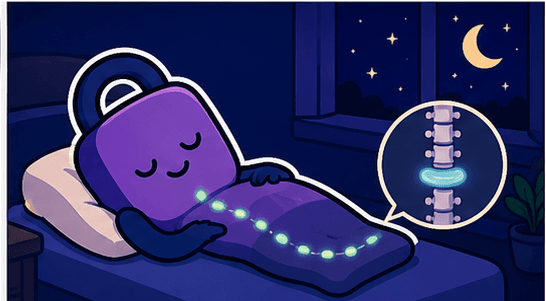
Do you wake up with a stiff or aching back? Learn how your sleep position and mattress affect spinal health, and discover the right sleeping methods for those with disc problems.
Why Does Your Back Hurt When You Wake Up?
During sleep, you maintain the same position for 7-8 hours. Continuous pressure on your spine, surrounding muscles, and ligaments during this time can cause pain.
Poor sleep positions or inappropriate mattresses can disrupt the natural curve of your spine (S-curve), putting unnecessary pressure on your discs.
Key Point
When your spine cannot maintain a neutral position during sleep, pressure between discs increases and stimulates surrounding nerves, causing pain.
What Happens to Your Discs During Sleep
Sleep is a crucial time for disc health. Let's explore what happens to your discs during this period.
Disc Rehydration
Discs that were compressed during the day reabsorb fluids and recover during sleep. This is why you're 1-2cm taller in the morning.
Pressure Redistribution
The pressure on your discs is significantly reduced when lying down compared to standing or sitting.
Muscle Relaxation
Muscles around the spine relax during sleep, releasing tension and allowing recovery.
Tissue Regeneration
Growth hormone is released during deep sleep, facilitating repair of damaged tissues.
Good vs Bad Sleep Positions for Your Discs
Sleep position directly impacts spinal health. This is especially important for those with disc problems.
Recommended Positions
Side Sleeping (Fetal Position)
Lie on your side with knees slightly bent. Place a pillow between your knees to help with pelvic alignment.
Back Sleeping
Place a pillow under your knees to maintain the natural curve of your lower back. Your neck pillow shouldn't be too high.
Positions to Avoid
Stomach Sleeping
Your neck turns to one side and your lower back overextends, putting significant stress on your discs.
Sleeping Without a Pillow
The natural curve of your neck isn't maintained, putting pressure on cervical discs.
Mattress and Pillow Selection Guide
Choosing proper bedding is key to spinal health.
Mattress
- •Medium firmness is ideal (5-7 on a scale of 1-10)
- •Too soft causes lower back sagging, too firm creates pressure points
- •Side sleepers need slightly softer, back sleepers need slightly firmer
- •Replace every 7-10 years
Pillow
- •Should support the natural curve of your neck
- •Side sleepers need shoulder-height pillows, back sleepers need lower pillows
- •Memory foam or latex pillows are effective for neck support
- •Replace when worn or deformed
Sleep Tips for Disc Patients
If you have disc problems, consider these tips.
Pre-sleep Stretching
Light stretching releases tension in muscles around the spine. Knee-to-chest and cat-cow poses are effective.
Get Up Carefully
Don't jump out of bed suddenly. Roll to your side and push up slowly with your arm.
Temperature Control
Cold environments stiffen muscles. Sleep warm and use a heating pad on your back if needed.
Ensure Adequate Sleep
Sufficient sleep is essential for disc recovery. Aim for at least 7 hours of sleep.
Change Positions
Staying in one position too long concentrates pressure on specific areas. Change positions occasionally.
When to See a Doctor
Consult a specialist if you experience these symptoms.
- Back pain lasting more than 2 weeks
- Pain or numbness radiating down your leg
- Pain that worsens at night
- Bowel or bladder dysfunction
- Leg weakness
Warning
Early treatment is crucial for acute disc herniation. Consult a specialist before symptoms worsen.
Sleep Habits for a Healthy Spine
Sleep is a crucial time for disc recovery. You can protect your spinal health with proper sleep positions and appropriate bedding choices.
If you have chronic back pain, examine your sleep environment. Small changes can make a big difference. If symptoms are severe, we recommend consulting a specialist.
⚠️ Important Notice
This article is for informational purposes only and is not a substitute for professional medical advice, diagnosis, or treatment. If you suspect you have a sleep disorder or any health condition, please consult a doctor or sleep specialist.

Take the First Step to Better Sleep
Build healthy sleep habits with Good Night Lock.
Download Good Night LockRelated Articles
Complete Guide to Sleep Apnea: Symptoms, Causes, Diagnosis, and Treatment
Do you sleep enough at night but still feel tired in the morning? Does your partner complain about your loud snoring? Have you ever woken up gasping for air? These symptoms could be signs of 'sleep apnea.' Let's learn about this common yet dangerous sleep disorder that affects approximately 20% of adults.
Complete Guide to REM Sleep Behavior Disorder: Why You Scream or Kick While Sleeping
Has your partner ever suddenly screamed, swung their fists, or jumped out of bed while sleeping? Or have you woken up from a vivid nightmare to find yourself hitting a wall? This could be 'REM Sleep Behavior Disorder (RBD)'. Let's explore this unusual sleep disorder.

Complete GABA Guide: Effects on Sleep and Proper Intake
Have you searched for GABA supplements because you can't sleep? 'Natural sedative', 'stress relief', 'sleep improvement'... The ads are flashy, but do they really work? Let's explore GABA's impact on sleep and the scientific evidence.

Complete Guide to Ecklonia Cava Benefits: Effects on Sleep and Scientific Evidence
Have you heard about 'Ecklonia cava extract' gaining attention as a sleep supplement? Can this brown seaweed growing along Korean and Japanese coasts really help with sleep? Let's explore the sleep benefits of Ecklonia cava extract with scientific research.
Why Your Back Hurts When You Wake Up: Causes and Solutions
Waking up with a stiff, aching back is something many of us experience. Why does back pain occur even after a full night's sleep? In this article, we explore the causes of morning back pain and effective solutions to fix it.

Top Vitamin D Foods and Their Impact on Sleep
Did you know that vitamin D deficiency affects nearly 1 billion people worldwide and is strongly linked to poor sleep quality? This essential nutrient plays a crucial role in regulating your sleep-wake cycle, and getting enough through your diet can dramatically improve your rest.