Sleep Divorce: Can Sleeping Apart Actually Improve Your Relationship?
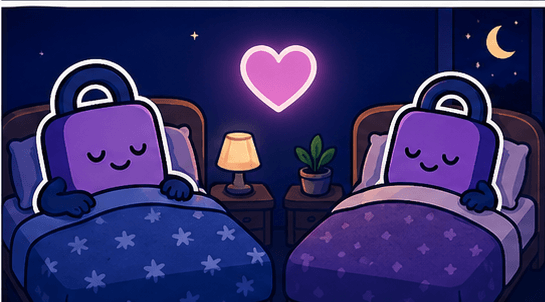
Sleeping in a separate room from your partner, commonly known as 'sleep divorce,' is gaining attention. According to a National Sleep Foundation survey, about 25% of couples already sleep apart, and this number is steadily increasing. If snoring, different sleep schedules, blanket-stealing, or temperature differences are degrading your sleep quality, sleeping separately might actually be the solution that saves your relationship. Let's explore whether sleep divorce really helps relationships, backed by scientific evidence.
What is Sleep Divorce?
Sleep divorce refers to couples sleeping in separate beds or separate rooms. While the word 'divorce' might sound negative, it can actually be a positive choice that improves relationships for many couples. In the UK, it's sometimes called 'sleep separation' or 'dual master bedrooms.'
Historically, sleeping in the same bed isn't that old of a tradition. Victorian-era upper class commonly slept separately, and even sharing a room was rare. Sleeping together only became the 'norm' in the mid-20th century when living spaces became smaller and TVs entered bedrooms. In other words, the idea that 'couples should sleep together' is historically quite recent.
According to a 2023 American Academy of Sleep Medicine (AASM) survey, 43% of couples reported that their partner's sleep habits interfered with their sleep. And 36% of couples who sleep apart reported improved sleep quality. These numbers show that sleep divorce isn't just a trend, but a solution that actually helps many people.
Key Point:
Sleep divorce is not a relationship failure. Rather, it's a mature decision to respect each other's sleep health and improve relationship quality. What matters isn't where you sleep, but whether you're both getting enough rest.
Signs You Should Consider Sleep Divorce
If any of these situations sound familiar, it might be time to seriously consider sleep divorce. Even one of these can put both partners' sleep health at risk:
Snoring or Sleep Apnea
If your partner's snoring wakes you up every night or prevents you from sleeping properly, it can seriously impact your health. Research shows that people sleeping next to a snoring partner lose an average of 1 hour of sleep per night. Sleep deprivation is linked to weakened immunity, weight gain, increased cardiovascular disease risk, depression, and cognitive decline. If snoring is severe, consider getting tested for sleep apnea.
Completely Different Sleep Schedules (Chronotype Mismatch)
If one of you is a morning person (lark) and the other is a night owl, you'll inevitably disturb each other's sleep. One person tries to sleep at 10 PM while the other comes to bed at 1 AM; one person wakes up at 6 AM and disturbs the other. Chronotype is largely genetically determined, so it's hard to change through 'effort.'
Different Sleep Environment Preferences
One person wants to sleep in a cool 64°F room, the other prefers a warm 75°F. One needs complete darkness, the other needs some light or TV sound. One likes heavy blankets, the other prefers light ones. These differences are really hard to compromise on.
Movement During Sleep
If your partner has Restless Leg Syndrome (RLS), Periodic Limb Movement Disorder (PLMD), or simply tosses and turns a lot, sleeping together disturbs both people's sleep. When mattress vibrations transfer, you frequently wake from deep sleep stages, significantly reducing sleep quality.
Increased Conflict from Sleep Deprivation
If tiredness makes you irritable over small things or leads to arguments, sleep problems are negatively affecting your relationship. According to UC Berkeley research, sleep-deprived couples have significantly reduced conflict resolution abilities and express gratitude less frequently.
Children or Pets Wake Only One Person
If young children or pets consistently wake only one person during the night, that person's sleep debt accumulates. During early parenting, sleeping separately while 'taking shifts' can be a smart choice.
Benefits of Sleep Divorce: What Research Shows
The benefits of sleep divorce aren't just speculation—they're backed by scientific research:
Dramatically Improved Sleep Quality
This is the biggest advantage. Without interruptions, you can get deep sleep, improving energy levels, mood, and concentration. According to Ohio State University research, people whose sleep was disturbed by their partner gained an average of 37 minutes more deep sleep after sleeping separately. That's roughly one complete sleep cycle.
Overall Health Improvement
Quality sleep helps strengthen the immune system, manage weight, and support heart and mental health. Sleep deprivation increases risk of Type 2 diabetes, heart disease, obesity, and depression. Better sleep makes you a healthier partner. Sleeping apart might be better for your partner's health too.
Better Daytime Relationship
When well-rested, patience increases and emotional regulation improves. On days with good sleep, your partner's little habits are less annoying, and you can have calmer conversations during conflicts. Research shows sleep deprivation reduces empathy and makes you more reactive to negative emotions.
Personal Space and Autonomy
Having your own space allows you to recharge. Especially for introverts, alone time is essential for maintaining a healthy relationship. Being able to read what you want, set your preferred temperature, and fall asleep whenever you want in your own room is a great freedom.
Intentional Choice of Intimacy
Interestingly, couples who sleep apart tend to plan intimate time more intentionally. Instead of 'just being together,' you're 'choosing' to be together. This can bring new vitality to relationships. Many couples report that sleeping apart actually improved their sex life.
Improved Work Performance
Better sleep leads to higher work productivity. Focus improves, creativity increases, and decision-making abilities get better. Risk of mistakes and accidents from sleep deprivation also decreases. Better performance at work means less stress, which positively affects your relationship.
Downsides and Concerns About Sleep Divorce
Of course, there are things to consider with sleep divorce. Let's look at them honestly:
Reduced Natural Intimacy
Bedtime conversations, morning physical affection, seeing your partner when you wake up. These small moments build intimacy. Sleeping apart means potentially missing these natural opportunities for connection. But this can be compensated for with intentional effort—and might even become more meaningful.
Social Stigma
Many people still believe 'couples should sleep together.' It might be hard to explain to parents, in-laws, or friends, and you might face misunderstandings like 'Is there a problem in your relationship?' But what matters isn't others' opinions—it's the happiness and health of both partners.
Could Be Used to Avoid Real Relationship Issues
Sleep divorce shouldn't become an excuse to avoid actual relationship problems. Sleeping apart because 'I don't want to be with you' is completely different from sleeping apart to 'sleep better and be a better partner.' Honestly examine your motivations.
Space and Cost Considerations
A separate bedroom requires space and can have economic constraints. In cities especially, an extra room is quite expensive. But you don't necessarily need a separate room—'Scandinavian style' with twin beds or separate mattresses in the same room can also be effective.
Difficult Conversation to Start
Telling your partner 'I want to sleep separately' isn't easy. It might make them feel rejected and could cause misunderstandings. How you start this conversation is key to success.
How to Successfully Practice Sleep Divorce
If you're considering sleep divorce, here are concrete methods for successful implementation:
Start with Open Conversation
The framing is crucial: it's not 'I want to be away from you' but 'I want us both to sleep better so our relationship improves.' This isn't rejection—it's an investment in the relationship. Discuss the concrete problems that have emerged (irritability from tiredness, health issues, etc.) and propose sleep divorce as a solution.
Create Bedtime Rituals
Even when sleeping apart, create time together before bed. Having tea while chatting, reading together, sharing three good things that happened today, goodnight kiss, etc. These routines maintain connection even with separated sleep. 15-30 minutes is enough.
Intentionally Plan Intimate Time
Intentionally plan physical affection and intimate time. Things that happened 'naturally' when sleeping together need to be 'planned' when sleeping apart. But many couples say this intentionally created time actually became more special and anticipated.
Be Flexible in Your Approach
You don't need to sleep apart every night. Separate during weekdays, together on weekends. Or together normally, but apart before important meetings or exams. Adjust flexibly according to circumstances. Rules are set together, and can be changed anytime if needed.
Check In Regularly
About once a month, discuss whether this arrangement is working well. Has sleep quality improved? How is the relationship? Needs and feelings can change over time, so ongoing communication is important. If there are problems, adjust.
Create Morning Connection Routines
Even sleeping apart, have coffee together in the morning, eat breakfast together, or at least hug for 5 minutes before starting the day. Feeling connected in the morning has positive effects throughout the day.
Alternatives to Try Before Sleep Divorce
Before completely sleeping apart, it's good to try other solutions first. You might be able to solve the problem without full separation:
Use a Bigger Bed
Switching to a king-size bed (76" wide) solves many space-related problems. There are also super king (78"+) and Alaska king (108") sizes. With more space, tossing and turning disturbs each other less.
Scandinavian Style: Separate Blankets
In Northern Europe, it's common for each person to use their own single blanket in one bed. This completely solves blanket-stealing and lets each person use their preferred weight and thickness. Temperature difference problems are solved too.
Get Professional Snoring Treatment
If snoring is the main issue, consult an ENT specialist or sleep clinic. Sleep apnea is a serious health issue that requires treatment. CPAP machines, oral appliances, weight loss, or in some cases surgery can help.
Custom Sleep Environment Solutions
There are various products: earplugs (for snoring noise), sleep masks (for light), dual-zone temperature-controlled mattresses (for temperature differences), motion-isolating mattresses (for movement). Not perfect solutions, but worth trying.
Compromise on Sleep Schedules
You don't have to perfectly match, but try bringing bedtimes closer by 30 minutes to an hour. Find compromises like 'go to bed together but the morning person gets up first' or 'the night owl comes in first and reads before sleeping later.'
Twin Beds or Split Mattresses
Place two twin beds together in the same room, or put two twin mattresses in a king-size frame. You can be close while still having your own sleep space.
Research and Statistics on Sleep Divorce
Let's look at research findings that support sleep divorce effectiveness:
25-35%
Percentage of couples sleeping separately in the US, UK, and Canada. This number is increasing every year.
43%
Percentage of couples in the 2023 AASM survey who reported their partner disturbed their sleep.
1 hour
Average sleep lost per night by people sleeping next to a snoring partner.
37 min
Average increase in deep sleep after separate sleeping (Ohio State University research).
UC Berkeley research showed that sleep deprivation decreases relationship satisfaction. On sleep-deprived days, couples became more self-centered, had reduced conflict resolution abilities, and expressed less gratitude. In other words, sleeping well is fundamental to being a good partner.
Celebrities Who Practice Sleep Divorce
Many celebrities have publicly mentioned sleep divorce, helping reduce stigma around this topic:
“Sleeping apart is something the next generation should make the norm”
— Cameron Diaz
“We started sleeping separately because of the kids, and our relationship got better”
— Kevin Jonas & Danielle Jonas
“It was a game-changer for our marriage. We both sleep better and are happier”
— Carson Daly
Thanks to their public stories, more and more people are starting to see sleep divorce not as 'relationship failure' but as a 'wise choice.'
Sleep Divorce: The Bottom Line
Sleep divorce isn't the right solution for every couple. But if sleep problems are affecting both your health and relationship, it's worth seriously considering.
What matters isn't 'where you sleep' but 'whether you're both sleeping well' and 'whether the relationship is healthy.' It's better to sleep apart and wake up refreshed and loving than to share a bed but be tired and irritable.
Have an open conversation, respect each other's sleep health, and find what works for both of you. Try it, adjust, and keep talking. A well-rested partner is a better partner.
Ultimately, the real goal of sleep divorce isn't 'separation' but 'better togetherness.' Sleeping apart at night is a choice to be better together during the day.
⚠️ Important Notice
This article is for informational purposes only and is not a substitute for professional medical advice, diagnosis, or treatment. If you suspect you have a sleep disorder or any health condition, please consult a doctor or sleep specialist.

Take the First Step to Better Sleep
Build healthy sleep habits with Good Night Lock.
Download Good Night LockRelated Articles
Why Is It So Hard to Wake Up in the Morning? Understanding Sleep Inertia
Do you find yourself hitting the snooze button multiple times every morning? Feel like you need an extra hour of sleep no matter how long you slept? You're experiencing sleep inertia - a fascinating phenomenon that affects millions of people worldwide.
Why Alcohol Disrupts Your Sleep (Even Though It Makes You Drowsy)
After a drink or two, you might feel relaxed and sleepy—perfect for bedtime, right? Not quite. While alcohol can make you drowsy initially, it actually sabotages your sleep quality in ways that leave you feeling tired the next day. Let's uncover the science behind alcohol's complex relationship with sleep.
The Napoleon Sleep Method: The Truth About 4-Hour Sleep
Have you heard the story about Napoleon, the great conqueror, who exercised powerful leadership while sleeping only 4 hours a day? Is this sleep method really effective? And did Napoleon actually use this method?
Why Do We Dream So Often? The Science Behind Frequent Dreams
Why do we have vivid dreams on some nights while remembering nothing on others? Let's explore the science of dreams to understand why we dream and how we can enjoy more restful nights.
The Science of Pulling an All-Nighter: How 24 Hours Without Sleep Affects Your Body and Brain
Cramming for an exam, racing against a project deadline, or staying up all night with friends—we've all been there. But what actually happens to your body and brain when you go a full 24 hours without sleep? Let's explore the science behind all-nighters and learn how to handle them when they're truly unavoidable.
Melatonin Side Effects: What to Know About 5mg & 10mg Doses
Melatonin is a natural hormone and popular sleep aid that helps millions get better rest. However, different dosages can come with various side effects. Let's explore how melatonin works, what side effects to watch for at different doses, and how to use it safely.