Cognitive Shuffling: The Scientific Method to Turn Racing Thoughts into Sleep
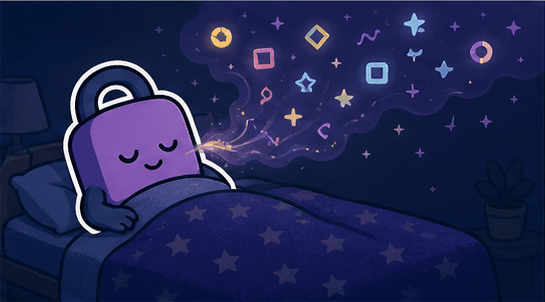
Does your mind fill with thoughts the moment you lie down? Cognitive Shuffling is a scientific technique that switches your brain from 'logical thinking mode' to 'sleep mode.' Developed by a Canadian cognitive scientist, this method replaces complex thoughts with random images to help you fall asleep naturally.
Create Your Sleep Routine
Design a personalized bedtime routine that includes Cognitive Shuffling.
What is Cognitive Shuffling?
Cognitive Shuffling is a sleep technique developed by Dr. Luc Beaudoin, a cognitive scientist at Simon Fraser University in Canada. This method utilizes the principle that when the brain conjures random, unrelated images, it recognizes that 'it's safe to sleep now.'
One reason we struggle to fall asleep is that our brain keeps engaging in logical, analytical thinking. Cognitive Shuffling breaks these logical thought patterns and transitions the brain into a state suitable for sleep.
Benefits of Cognitive Shuffling
Scientifically Validated
A sleep technique developed based on cognitive science research.
Blocks Worry
Random images break the cycle of anxious thoughts.
Easy and Fun
Anyone can start immediately without complex techniques.
Fast Results
Most people fall asleep within 5-15 minutes.
How to Practice Cognitive Shuffling
There are several variations of Cognitive Shuffling. Here are the most popular methods.
Method 1: Word-Image Technique (Basic)
Step 1: Choose a Word
Think of a random word. Example: 'apple,' 'ocean,' 'chair.' Emotionally neutral words work best.
Step 2: Start with the First Letter
Think of other words starting with that word's first letter. If it's 'apple,' think of words starting with 'A': ant, arrow, airplane...
Step 3: Visualize Images
For each word, vividly visualize the image for 2-3 seconds. The ant's tiny legs, an arrow flying through the air...
Step 4: Move to the Next Letter
When you run out, move to the next letter. Words starting with 'P,' then 'P'...
Method 2: Category Technique
Choose a specific category and visualize items one by one.
Example Categories
- • Animals: elephant → penguin → tiger → rabbit...
- • Food: pizza → chocolate → spaghetti → ice cream...
- • Places: beach → mountain → library → park...
- • Items by color: red apple → red fire truck → red rose...
Method 3: Story Building Technique
Connect random words to create nonsensical stories. They don't need to be logical!
Example: 'A pink elephant is playing guitar at a pizza shop while holding an umbrella. Next to it, a penguin sings while roller skating...'
Why is Cognitive Shuffling Effective?
Blocks Logical Thinking
Random image sequences deactivate the brain's prefrontal cortex (responsible for planning and analysis). When the brain decides 'nothing important is happening,' it switches to sleep mode.
Induces Micro-Dreams
Unrelated images create a state similar to dreaming. This helps facilitate natural sleep transition.
Breaks the Worry Loop
The brain can only focus on one task at a time. When you concentrate on random images, there's no room for worried thoughts to enter.
Promotes Relaxation Response
Neutral, peaceful images activate the parasympathetic nervous system, lowering heart rate and blood pressure.
Tips for Cognitive Shuffling Success
Choose Emotionally Neutral Images
Avoid exciting or anxiety-inducing images. Ordinary, everyday objects work best.
Avoid Logical Connections
Don't create stories or connections between images. Complete randomness is most effective.
Maintain Pace
Only spend 2-3 seconds on each image. Thinking too long returns you to analytical mode.
Perfection Not Required
It's okay if you can't think of words. Move on. The goal is sleep, not solving puzzles.
Practice Consistently
It may feel awkward at first. After 1-2 weeks of practice, you'll fall asleep more easily and quickly.
Who Benefits Most?
Overthinkers
Especially effective for those who keep thinking about tomorrow's tasks, past conversations, or future plans in bed.
Perfectionists
Provides a way to 'rest' the brain for those who tend to analyze and plan everything.
People with Anxiety
Helps break the cycle of worry and focus on the present moment.
Those Who Struggle with Other Methods
If meditation or breathing exercises don't work for you, this visual, game-like approach might be more effective.
Frequently Asked Questions
What if I can't fall asleep with Cognitive Shuffling?
If it doesn't work after 15-20 minutes, get up briefly and do a boring activity (like light reading) in dim light, then try again. It may take practice initially.
Do I have to use the English alphabet?
No! You can use your native language's letters or the category technique. Choose whatever method is comfortable for you.
I can't visualize images well.
Perfect visualization isn't necessary. Just thinking of words works too. It gets easier with practice.
Can I combine it with other sleep techniques?
Absolutely! Starting with 4-7-8 breathing to relax, then beginning Cognitive Shuffling is even more effective.
Can I use it for naps?
Yes, it's effective before naps or short rest periods. It helps you quickly reach a relaxed state.
Key Takeaways
- Cognitive Shuffling is a scientific technique that blocks logical thinking with random images to induce sleep
- Choose from word-image, category, or story-building methods—whatever works for you
- Emotionally neutral and unrelated images are most effective
- Spend only 2-3 seconds on each image before moving on quickly
- Especially effective for overthinkers and perfectionists
- 1-2 weeks of consistent practice leads to faster, easier sleep
Conclusion: Shuffle Your Brain Tonight
Cognitive Shuffling is a scientific sleep technique that anyone can try without complex techniques or tools. On nights when racing thoughts and worries keep you awake, send your brain the signal that 'it's okay to rest now.'
Tonight, lie in bed and conjure random words and images. A pink elephant, a blue guitar, a yellow umbrella... Before you know it, you'll be on your way to dreamland.
⚠️ Important Notice
This article is for informational purposes only and is not a substitute for professional medical advice, diagnosis, or treatment. If you suspect you have a sleep disorder or any health condition, please consult a doctor or sleep specialist.

Take the First Step to Better Sleep
Build healthy sleep habits with Good Night Lock.
Download Good Night LockRelated Articles
Effective Breathing Techniques for Sleep: From 4-7-8 to the Military Sleep Method
Lying in bed with a busy mind while sleep eludes you? Try breathing techniques instead of sleeping pills. Scientifically proven breathing methods activate the parasympathetic nervous system, quickly relaxing both body and mind. Here are breathing techniques you can start using tonight.

Jellyfish Sleep Method: Let Your Body and Mind Float Like Water
Lying in bed but too tense to fall asleep? The Jellyfish Sleep Method is a relaxation technique that releases all body tension like a jellyfish floating on the ocean, helping you fall asleep naturally. No special tools needed—you can start tonight.