The Complete Guide to Insomnia: Causes, Symptoms, and Scientifically Proven Treatments
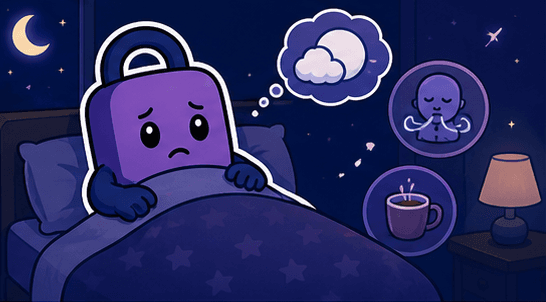
Do you find yourself staring at the ceiling every night, tossing and turning? Does it take you more than 30 minutes to fall asleep, or do you keep waking up in the early morning? Insomnia, experienced by 1 in 3 adults worldwide, isn't just about 'not being able to sleep.' Let's explore the scientific causes of insomnia through to evidence-based treatments.
What Is Insomnia? Understanding the 3 Types
Insomnia is a sleep disorder characterized by difficulty falling asleep, staying asleep, or waking too early, despite having adequate opportunity to sleep. It's different from just missing a night or two of sleep.
According to WHO criteria, it's classified as 'chronic insomnia' when symptoms occur 3 or more days per week for at least 3 months. Approximately 30% of adults worldwide experience insomnia symptoms, with 10% suffering from chronic insomnia.
Sleep Onset Insomnia
Taking 30 minutes or more to fall asleep. You lie in bed with a racing mind, exhausted but unable to sleep.
💡 Primarily caused by anxiety, stress, or a hyperaroused state.
Sleep Maintenance Insomnia
Falling asleep but frequently waking during the night and struggling to fall back asleep. Waking at 2-4 AM and lying awake for hours.
💡 Common causes include pain, sleep apnea, depression, and anxiety disorders.
Early Morning Awakening
Waking 1-2 hours earlier than desired and being unable to fall back asleep. Automatically waking at 4-5 AM without an alarm.
💡 A classic symptom of depression, and becomes more common with age.
Important:
These three types can occur together. What starts as sleep onset insomnia may worsen over time into sleep maintenance insomnia.
The 6 Main Causes of Insomnia
Insomnia rarely has a single cause. Most cases involve multiple factors working together:
Psychological Causes (Most Common, 50%)
Stress, anxiety, depression, trauma, and excessive worry create a hyperaroused state. Ironically, worrying about not being able to sleep actually makes insomnia worse.
예시: Work stress, test anxiety, breakups, family problems, financial difficulties
✓ Cognitive Behavioral Therapy for Insomnia (CBT-I) is most effective.
Circadian Rhythm Disruption
When your circadian rhythm is disrupted, your body becomes confused about when to sleep. Melatonin secretion becomes dysregulated.
예시: Shift work, jet lag, irregular sleep schedules, late-night smartphone use
✓ Maintain consistent sleep and wake times, get morning sunlight exposure
Poor Sleep Habits (Sleep Hygiene)
A bedroom environment unsuitable for sleep or poor pre-sleep habits.
예시: Using smartphones in bed, bright lighting, noise, high temperature, caffeine/alcohol consumption
✓ Improve sleep hygiene (see section below)
Medical Conditions
Chronic pain, respiratory problems, digestive issues, and other conditions interfere with sleep.
예시: Sleep apnea, restless leg syndrome, acid reflux, thyroid disorders, chronic pain
✓ Treating the underlying condition is the priority.
Medications and Caffeine
Substances with stimulating effects interfere with sleep. Caffeine has a half-life of 5-6 hours.
예시: Coffee (after 2 PM), energy drinks, some cold medications, steroids, antidepressants
✓ Avoid caffeine after 2 PM, consult your doctor about medications
Age (Aging)
As we age, deep sleep decreases and nighttime awakenings increase. 50% of people over 65 experience insomnia.
예시: Decreased melatonin production, weakened bladder (nighttime urination), increased pain
✓ Reduce daytime naps, exercise regularly, maintain consistent sleep schedule
Self-Diagnosing Insomnia: Do I Really Have It?
If 3 or more of the following symptoms occur 3+ days per week for 3+ months, you likely have insomnia:
- □Takes 30+ minutes to fall asleep (normal: 10-20 minutes)
- □Waking 3+ times per night
- □Waking early in the morning and unable to fall back asleep
- □Total sleep time is less than 6 hours
- □Feeling tired and unrefreshed even after sleep
- □Difficulty concentrating and increased irritability during the day
- □Feeling sleepy during the day but unable to sleep at night
- □Feeling anxious and worried about not being able to sleep
Mild (1-2 symptoms)
Temporary insomnia. May naturally improve once stress is resolved.
→ Improving sleep hygiene is usually sufficient.
Moderate (3-5 symptoms)
Risk of becoming chronic. Starting to affect daily life.
→ Consider consulting a sleep specialist.
Severe (6+ symptoms)
Serious insomnia. High risk of leading to depression and anxiety disorders.
→ Immediate visit to a sleep clinic or psychiatrist is necessary.
The Scientific Impact of Insomnia on Body and Mind
Insomnia isn't just about feeling 'tired.' When it persists long-term, it has serious effects on your entire brain and body:
Brain Function Decline
단기 영향
Reduced concentration, memory impairment, weakened judgment, slower reaction time
장기 영향
2x increased risk of Alzheimer's disease, atrophy of the hippocampus (memory center)
🔬 During sleep, the brain clears beta-amyloid (the substance that causes dementia). Insomnia disrupts this cleaning process.
Mental Health Deterioration
단기 영향
Irritability, anxiety, heightened sensitivity, emotional dysregulation
장기 영향
5x increased risk of depression, 3x increased risk of anxiety disorders. Suicide risk also increases.
🔬 Sleep deprivation hyperactivates the amygdala (emotion center) while suppressing the prefrontal cortex (rational judgment).
Weakened Immune System
단기 영향
Increased susceptibility to colds, slower wound healing
장기 영향
Chronic inflammation, increased cancer risk
🔬 Cytokines secreted during sleep activate immune cells. Insomnia disrupts this process.
Metabolic Disease Risk
단기 영향
Increased appetite, cravings for sweets
장기 영향
Sharp increase in risk of obesity, diabetes, hypertension, and heart disease
🔬 Sleep deprivation decreases leptin (satiety hormone), increases ghrelin (hunger hormone), and raises insulin resistance.
Increased Accident Risk
단기 영향
Drowsy driving, workplace errors
장기 영향
2.5x increased traffic accident risk, increased workplace injuries
🔬 Being awake for 17 hours produces cognitive impairment equivalent to a blood alcohol content of 0.05%.
Scientifically Proven Insomnia Treatments
Before relying on medication, there are approaches you should try first. These methods are recommended by the American Academy of Sleep Medicine as 'first-line treatments':
Cognitive Behavioral Therapy for Insomnia (CBT-I) - Gold Standard Treatment
More effective than medication with no side effects. 75% of patients experience improvement within 6-8 weeks.
Sleep Restriction Therapy
Match time in bed to actual sleep time. Don't lie in bed if you're not sleeping. Increases sleep efficiency to over 90%.
Stimulus Control Therapy
Relearn that bed = sleep only. No smartphone, TV, or reading in bed. If not asleep within 20 minutes, get up and go elsewhere.
Cognitive Restructuring
Change negative thoughts like 'What if I can't sleep tonight?' to 'This is just temporary.' Adjust unrealistic expectations about sleep.
Relaxation Training
Progressive muscle relaxation, diaphragmatic breathing, meditation. Calms the hyperaroused state.
✓ Effects persist after 12 months with low relapse rates.
Sleep Hygiene Improvement - The Foundation
Consistent Sleep Schedule
Go to bed and wake up at the same time every day, including weekends. Maintaining a steady circadian rhythm is key.
Optimize Bedroom Environment
Temperature 64-68°F (18-20°C), complete darkness (blackout curtains), quiet (earplugs), comfortable bedding. Your bedroom should be dark, cool, and quiet like a cave.
Block Blue Light
No smartphones, tablets, or TV 2 hours before bed. Blue light suppresses melatonin by over 50%.
Limit Caffeine
No caffeine after 2 PM. Includes coffee, green tea, chocolate, energy drinks. Caffeine's half-life is 5-6 hours.
Avoid Alcohol
There's no such thing as a 'nightcap.' Alcohol may help you fall asleep but disrupts REM sleep and causes frequent awakenings.
Regular Exercise
30+ minutes of aerobic exercise during the day. Avoid vigorous exercise 3 hours before bed. Exercise increases deep sleep.
Medication - Last Resort
Medications should only be used for short-term (2-4 weeks) crisis management. Long-term use causes dependence, tolerance, and rebound insomnia.
Melatonin (Over-the-Counter)
✓ Natural hormone, minimal side effects, effective for jet lag
✗ Highly individual effectiveness, only helps with falling asleep, not maintaining sleep
💊 0.5-5mg, 30 minutes to 1 hour before bed
Antihistamines (Over-the-Counter)
✓ Available at pharmacies, inexpensive
✗ Next-day drowsiness, rapid tolerance development, cognitive impairment
⚠️ May increase dementia risk in elderly
Benzodiazepines (Prescription)
✓ Fast-acting, powerful
✗ Very high dependence risk, withdrawal symptoms, fall risk (elderly)
⚠️ Short-term use only (within 2-4 weeks)
Non-Benzodiazepine Z-Drugs (Prescription)
✓ Lower dependence than benzodiazepines
✗ Side effects include sleepwalking, sleep eating, memory loss
📋 Zolpidem, zopiclone, etc.
⚠️ Medications don't address the root cause. Should be combined with CBT-I and gradually discontinued.
Can't Sleep Tonight? 10 Things to Try Right Now
When you've been lying in bed for 30 minutes and still can't sleep, try these:
Get Out of Bed (Most Important!)
If you're not asleep within 20 minutes, get up and go to another room. Don't let your bed become associated with being unable to sleep.
→ Read in the living room (dim lighting), light stretching, warm milk
4-7-8 Breathing Technique
Inhale for 4 seconds, hold for 7 seconds, exhale for 8 seconds. Activates the parasympathetic nervous system to lower heart rate.
→ Repeat 4 times. You'll feel your body relax within 60 seconds.
Body Scan Meditation
Slowly bring awareness from toes to head, relaxing each part. Focus on each area for 10 seconds.
→ When you find tension, release it as you exhale.
Paradoxical Intention
Think 'I must stay awake.' Reducing sleep pressure paradoxically brings sleep.
→ Keep your eyes open and mentally repeat 'I absolutely will not fall asleep.'
Cool Down
You need your body temperature to drop to fall asleep. Stick your feet out from under the covers or splash cold water on your face.
→ Placing a cool cloth on your wrists is also effective.
Hide the Clock
Looking at the clock makes you anxious: 'Oh no, it's already 3 AM.' Turn the clock around or move it to another room.
→ Set your alarm but don't check the time.
Imagine Something Boring
Count backwards from 1000 by 7s, recite the alphabet backwards, or other monotonous mental tasks.
→ Tire your brain with simple repetitive thoughts instead of complex worries.
Write Down Your Worries
Write your racing thoughts on paper. Making a 'to-do list for tomorrow' reassures your brain.
→ Keep a notepad and pen by your bed.
Progressive Muscle Relaxation
Starting with your feet, tense each muscle group for 5 seconds, then completely release.
→ Feet → calves → thighs → abdomen → chest → arms → shoulders → face, in that order
White Noise or Rain Sounds
Consistent background noise masks irregular sounds and calms the brain.
→ Search for 'white noise' or 'rain sounds' on apps or YouTube
Things You Should Never Do:
- ✗Looking at your smartphone (blue light suppresses melatonin)
- ✗Turning on the TV (maintains arousal state)
- ✗Drinking alcohol (worsens sleep quality)
- ✗Constantly checking the clock (amplifies anxiety)
- ✗Continuing to toss and turn in bed (associates bed with insomnia)
When to See a Doctor: Signs You Need Professional Help
If you're experiencing any of the following, don't try to handle it alone—visit a sleep clinic or psychiatrist:
🚩 Insomnia has persisted for more than 3 months
Chronic insomnia is very difficult to resolve on your own. Professional intervention is necessary.
🚩 Severe daytime sleepiness makes daily life impossible
This can be dangerous for driving, work, and school. Accident risk is high.
🚩 Snoring and breathing pauses during sleep
Possible sleep apnea. Increases risk of heart disease and stroke. Sleep study needed.
🚩 Leg discomfort prevents sleep
Possible restless leg syndrome. Dopamine-regulating medication may be needed.
🚩 Experiencing depression, anxiety, or suicidal thoughts
Insomnia and depression create a vicious cycle. Immediate psychiatric consultation needed.
🚩 Taking sleep medication for more than 1 month
Risk of dependence and tolerance. Need a plan with a specialist to discontinue.
Which Type of Doctor Should I See?
Sleep Clinic (Sleep Center)
Suspected snoring, sleep apnea, or restless leg syndrome
Sleep studies available
Psychiatry
Insomnia caused by stress, anxiety, or depression
CBT-I, counseling, medication
Family Medicine/Internal Medicine
General insomnia, initial consultation
Can refer to specialized clinics if needed
Conclusion: Insomnia Is a Treatable Condition
Insomnia isn't a 'matter of willpower' or 'something you just have to endure.' There are scientifically proven treatments, and most cases can be improved.
The most important thing is 'not giving up.' CBT-I shows results in 6-8 weeks and is far more effective long-term than medication. For mild insomnia, improving sleep hygiene alone can be sufficient.
However, if it persists for more than 3 months, is accompanied by depression/anxiety, or seriously interferes with daily life, you must seek professional help. Untreated insomnia can lead to depression, heart disease, diabetes, and more.
Start Tonight:
- ✅ Go to bed and wake up at the same time every day (including weekends)
- ✅ Keep your bedroom cool (64-68°F/18-20°C), dark, and quiet
- ✅ Turn off your smartphone 2 hours before bed
- ✅ No caffeine after 2 PM
- ✅ Get out of bed if not asleep within 20 minutes
- ⚠️ Visit a doctor if symptoms persist for more than 3 months
Good sleep makes 1/3 of your life happier and makes the other 2/3 healthier and more energetic. Don't give up. Tonight could be your last sleepless night. 💙
⚠️ Important Notice
This article is for informational purposes only and is not a substitute for professional medical advice, diagnosis, or treatment. If you suspect you have a sleep disorder or any health condition, please consult a doctor or sleep specialist.

Take the First Step to Better Sleep
Build healthy sleep habits with Good Night Lock.
Download Good Night LockRelated Articles
Complete Guide to Narcolepsy: Symptoms, Causes, Diagnosis, and Treatment
Sudden overwhelming sleepiness, knees buckling while laughing... Narcolepsy isn't just 'being sleepy.' It's a neurological disorder caused by hypocretin deficiency. Learn everything about this condition that affects 1 in 2,000 people.
The Complete Guide to Snoring: Causes, Risks, and Solutions
Do you wake your partner every night with thunderous snoring? Or have you ever been startled awake by your own snoring? Snoring isn't just a noisy nuisance—it can be a signal of underlying health issues. About 40% of adults worldwide snore habitually, and some cases involve serious sleep apnea. Let's explore everything from the causes of snoring to effective treatments.
Orthosomnia: When Sleep Tracking Disrupts Your Sleep
Do you feel more anxious after checking your sleep score on your smartwatch? Has your pursuit of perfect sleep actually made it harder to sleep? This is 'Orthosomnia.' As sleep tracking devices become mainstream, we explore this modern sleep disorder that has emerged from our obsession with sleep data.
Awake Until Dawn? It Could Be Delayed Sleep Phase Syndrome (DSPS)
Do you try to fall asleep every night but can't until 2-3 AM, and then struggle terribly to wake up in the morning? If being a 'night owl' is seriously disrupting your daily life, you might have Delayed Sleep Phase Syndrome (DSPS).
Why Can't I Sleep? Understanding Insomnia and Sleep Disorders
Lying in bed but can't fall asleep? Does trying harder to sleep only make you feel more awake? Learn about the causes and solutions to this common problem faced by many modern people.
Exploding Head Syndrome: When Your Brain Goes Bang at Night
Have you ever been jolted awake by a loud bang, crash, or explosion in your head, only to find everything is completely silent? You're not alone. This strange phenomenon is called Exploding Head Syndrome, and while it sounds alarming, it's more common than you might think.