Naps vs Night Sleep: Which is More Efficient? A Scientific Comparison
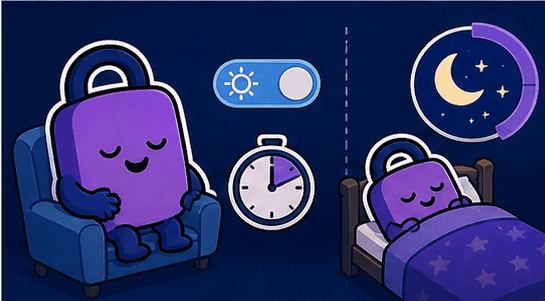
When you're short on nighttime sleep in your busy life, can naps be a substitute? Some say a 30-minute nap is as effective as 2 hours of night sleep—but is it really true? Through sleep science, let's compare the efficiency of naps versus night sleep and discover when each type of sleep is most effective.
What Fundamentally Differentiates Naps from Night Sleep?
Naps and night sleep aren't just different in their timing. Our body's circadian rhythm, hormone secretion, and sleep quality are completely different between the two.
Night sleep is natural sleep designed to align with our body's 'circadian rhythm (biological clock)'. When the sun sets, melatonin—the sleep hormone—is secreted, body temperature drops, and our body automatically switches to sleep mode.
Naps, on the other hand, work against our circadian rhythm. During the day, cortisol (the alertness hormone) is high and melatonin is almost absent, making it difficult to sleep as deeply as night sleep, even for the same duration.
Key Difference:
Night sleep is 'natural sleep' that aligns with circadian rhythm, while naps are 'supplementary sleep' that works against it. Even the same 1 hour of sleep produces completely different effects depending on whether you sleep at night or during the day.
Naps vs Night Sleep by Sleep Stages
Sleep consists of REM sleep and NREM stages 1-3. Each stage has a different role, and naps and night sleep experience these stages differently:
Stage 1 (Light Sleep)
⏱️ 5-10 minutes: 5-10 minutes
💤 낮잠: Easily reached during naps
Transition between consciousness and sleep. You can be easily awakened.
Stage 2 (True Sleep Begins)
⏱️ 5-10 minutes: 10-25 minutes
💤 낮잠: Reachable with a 20-minute nap
Heart rate slows and body temperature drops. Memory consolidation begins.
Stage 3 (Deep Sleep)
⏱️ 5-10 minutes: 20-40 minutes
💤 낮잠: Requires 90+ minute nap
Physical recovery, immune system strengthening, growth hormone release. This is the core stage of night sleep.
REM Sleep (Dreaming Sleep)
⏱️ 5-10 minutes: 10-60 minutes
💤 낮잠: Almost absent in naps
Emotional regulation, creativity, long-term memory formation. Primarily occurs in early morning.
Night sleep repeats all stages 4-6 times in 90-minute cycles over 7-9 hours. Deep sleep (stage 3) is most abundant in the first half of the night, while REM sleep is most abundant in early morning.
Naps, being shorter, mostly stay in stages 1-2. While you need 90+ minutes to reach stage 3, it's difficult to go as deep during the day due to circadian rhythm.
The Surprising Benefits of Naps (When Done Right)
While naps can't completely replace night sleep, when used correctly, they have remarkable benefits:
Immediate Cognitive Enhancement (10-20 min nap)
According to NASA research, a 26-minute nap improved pilots' performance by 34% and alertness by 54%. More effective than caffeine.
Memory Enhancement (30-60 min nap)
German research showed memory consolidation effects from just a 6-minute nap. Short naps during study or work help convert learning into long-term memory.
Creativity Boost (60-90 min nap)
Longer naps that include REM sleep connect different brain regions, enhancing creative problem-solving abilities. Salvador Dalí also used this method.
Cardiovascular Health Improvement
Greek research found that people who napped 3+ times per week had 37% lower heart disease mortality. Naps lower blood pressure and reduce stress.
Mood Enhancement & Stress Relief
Short naps calm the amygdala (emotional center). Just 20 minutes when angry or stressed can significantly improve your mood.
Can Naps Replace Night Sleep? (Conclusion: Impossible)
No matter how much you nap, completely replacing night sleep is impossible. The reasons are clear:
Insufficient Deep Sleep (Stage 3)
Physical recovery, immune strengthening, and growth hormone release primarily occur during night sleep's deep sleep stage. Naps can't provide sufficient deep sleep.
⚠️ Long-term immune decline, inadequate muscle recovery, accelerated aging
Almost No REM Sleep
Emotional regulation, trauma processing, and long-term memory formation occur during REM sleep. Naps have little to no REM sleep.
⚠️ Failed emotional regulation, increased depression/anxiety risk, reduced learning efficiency
Circadian Rhythm Disruption
Excessively long naps (90+ minutes) interfere with night sleep. Evening melatonin secretion decreases, potentially causing insomnia.
⚠️ Sleep-wake cycle collapse, chronic insomnia, metabolic disease risk
Sleep Inertia
After long naps, you'll feel groggy with impaired judgment for 30 minutes to 2 hours. Productivity can actually plummet.
⚠️ Reduced work performance, increased accident risk
According to Harvard Medical School research, 8 hours of night sleep is far more effective than 6 hours of night sleep + 2 hours of napping. Even with the same total sleep time, sleeping continuously at night is crucial.
Optimal Napping Strategy: Time-Based Guide
For naps, timing and duration are key. The same 30 minutes can have completely different effects depending on when and how you sleep:
Power Nap (10-20 minutes)
⏰ 시간: 1-3 PM
✨ 효과: Immediate alertness boost, fatigue relief
👤 적합: Office workers, students, drivers
💡 Set an alarm and you can even sleep sitting up. Coffee naps (coffee before napping) are also effective.
Memory Enhancement Nap (30-60 minutes)
⏰ 시간: 1-2 PM
✨ 효과: Memory consolidation, learning retention
👤 적합: Exam preparation, learning new skills
💡 You'll experience 5-15 minutes of sleep inertia after waking. Avoid before important appointments.
Creative Nap (60-90 minutes)
⏰ 시간: 1-2 PM (weekends)
✨ 효과: Includes REM sleep, enhances creativity and insight
👤 적합: Artists, tasks requiring problem-solving
💡 Complete one cycle (90 minutes) to minimize sleep inertia. Can affect night sleep, use with caution.
Nap Times to Absolutely Avoid
🌅 Morning (6-11 AM): Unnecessary if night sleep was sufficient. Wanting to nap signals sleep deprivation.
🌇 After 4 PM: Reduces sleep pressure for night sleep, causing insomnia.
🌙 After dinner: Completely disrupts your night sleep cycle.
These People Should Absolutely Avoid Naps!
In some cases, naps can actually be harmful:
❌ Insomnia Patients
Naps reduce nighttime sleep pressure, worsening insomnia. Completely eliminating naps is the first step in treatment for better night sleep.
❌ Depression Patients
Naps can further disrupt circadian rhythm, potentially worsening depression. Getting sunlight and staying awake is more helpful for treatment.
❌ Sleep Apnea
Apnea occurs during naps too, making you even more tired. Improving nighttime sleep quality is the priority over napping.
❌ Shift Workers
With already irregular circadian rhythms, adding naps can completely collapse your sleep cycle. Establishing consistent sleep times is the priority.
Naps vs Night Sleep at a Glance
| Feature | 🌙 Night Sleep (7-9 hours) | ☀️ Nap (10-90 minutes) |
|---|---|---|
| Circadian Rhythm | ✅ Natural melatonin secretion | ❌ High alertness hormones |
| Deep Sleep (Stage 3) | ✅ Sufficient (90-120 min) | ⚠️ Insufficient or absent |
| REM Sleep | ✅ Sufficient (90-120 min) | ❌ Almost none |
| Physical Recovery | ✅ Perfect (growth hormone, immunity) | ⚠️ Limited |
| Emotional Regulation | ✅ Perfect (REM sleep) | ❌ Almost none |
| Immediate Alertness | ⚠️ 30 min after waking | ✅ Immediate effect with 10-20 min nap |
| Memory | ✅ Long-term memory completion | ⚠️ Short-term consolidation only |
| Practicality | ⚠️ Requires 7-9 hours | ✅ 20 minutes is enough |
Conclusion: Naps and Night Sleep Are Complementary
Naps cannot replace night sleep. But they can complement it.
The ideal sleep strategy is '7-9 hours of quality night sleep + 10-20 minute power naps when needed'. If you try to compensate for insufficient night sleep with naps, your sleep cycle will deteriorate and chronic fatigue will persist.
A 20-minute nap between 1-2 PM after lunch can significantly boost afternoon work efficiency. However, sleeping more than 30 minutes causes sleep inertia, and napping after 4 PM ruins night sleep.
Golden Rules
- ✅ 7-9 hours of night sleep is the top priority
- ✅ Naps should be 1-3 PM, under 20 minutes
- ⚠️ If you have insomnia, no naps
- ⚠️ 30-60 minute naps = expect sleep inertia
- ❌ 90 minute naps = expect night sleep interference
⚠️ Important Notice
This article is for informational purposes only and is not a substitute for professional medical advice, diagnosis, or treatment. If you suspect you have a sleep disorder or any health condition, please consult a doctor or sleep specialist.

Take the First Step to Better Sleep
Build healthy sleep habits with Good Night Lock.
Download Good Night LockRelated Articles
Why Is It So Hard to Wake Up in the Morning? Understanding Sleep Inertia
Do you find yourself hitting the snooze button multiple times every morning? Feel like you need an extra hour of sleep no matter how long you slept? You're experiencing sleep inertia - a fascinating phenomenon that affects millions of people worldwide.
Why Alcohol Disrupts Your Sleep (Even Though It Makes You Drowsy)
After a drink or two, you might feel relaxed and sleepy—perfect for bedtime, right? Not quite. While alcohol can make you drowsy initially, it actually sabotages your sleep quality in ways that leave you feeling tired the next day. Let's uncover the science behind alcohol's complex relationship with sleep.
The Napoleon Sleep Method: The Truth About 4-Hour Sleep
Have you heard the story about Napoleon, the great conqueror, who exercised powerful leadership while sleeping only 4 hours a day? Is this sleep method really effective? And did Napoleon actually use this method?
Why Do We Dream So Often? The Science Behind Frequent Dreams
Why do we have vivid dreams on some nights while remembering nothing on others? Let's explore the science of dreams to understand why we dream and how we can enjoy more restful nights.
The Science of Pulling an All-Nighter: How 24 Hours Without Sleep Affects Your Body and Brain
Cramming for an exam, racing against a project deadline, or staying up all night with friends—we've all been there. But what actually happens to your body and brain when you go a full 24 hours without sleep? Let's explore the science behind all-nighters and learn how to handle them when they're truly unavoidable.
Melatonin Side Effects: What to Know About 5mg & 10mg Doses
Melatonin is a natural hormone and popular sleep aid that helps millions get better rest. However, different dosages can come with various side effects. Let's explore how melatonin works, what side effects to watch for at different doses, and how to use it safely.