Complete Guide to REM Sleep Behavior Disorder: Why You Scream or Kick While Sleeping
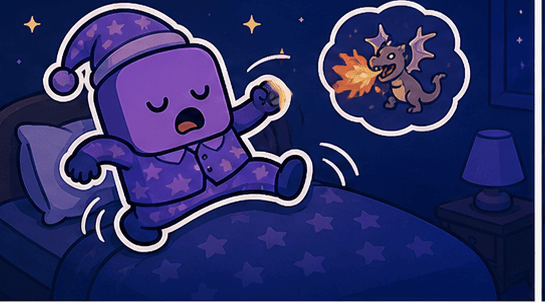
Has your partner ever suddenly screamed, swung their fists, or jumped out of bed while sleeping? Or have you woken up from a vivid nightmare to find yourself hitting a wall? This could be 'REM Sleep Behavior Disorder (RBD)'. Let's explore this unusual sleep disorder.
What is REM Sleep Behavior Disorder?
REM Sleep Behavior Disorder (RBD) is a sleep disorder where people physically act out their dreams during REM sleep. During normal REM sleep, muscles are temporarily paralyzed to prevent acting out dreams, but in RBD patients, this paralysis is incomplete or absent.
As a result, patients physically punch when fighting in dreams, kick their legs when running in dreams, and actually shout when screaming in dreams. This can cause injury to themselves or their sleeping partners.
RBD mainly occurs in men over 50 and affects about 0.5-1% of the total population. Importantly, RBD may be an early sign of neurodegenerative diseases such as Parkinson's disease.
Normal REM Sleep
- ✓Complete muscle atonia (paralysis)
- ✓Dreams occur but body doesn't move
- ✓Only eyes move rapidly
- ✓Upon waking, only dream content is remembered
REM Sleep Behavior Disorder
- ✗Incomplete or absent muscle atonia
- ✗Actually act out dream content
- ✗Limbs and torso move violently
- ✗Upon waking, recognize that actions matched dreams
Symptoms of REM Sleep Behavior Disorder
RBD symptoms appear both during sleep and after waking. Most often, partners or family members notice them first.
Movements
- •Kicking or flailing limbs
- •Punching, kicking
- •Jumping out of bed
- •Walking around (similar to sleepwalking)
- •Grabbing or throwing objects
Vocalizations
- •Screaming, yelling
- •Swearing or aggressive speech
- •Crying, laughing
- •Unintelligible mumbling
- •Talking (with dream characters)
Dream Characteristics
Most dreams in RBD patients are violent or threatening. They often involve being attacked, chased, or fighting. Even normally peaceful people defend or attack vigorously in dreams.
Causes of REM Sleep Behavior Disorder
RBD occurs due to dysfunction in the brainstem. Normally during REM sleep, specific areas of the brainstem inhibit motor neurons to cause muscle paralysis, but when this mechanism fails, RBD develops.
Idiopathic (Unknown Cause) RBD
Occurs without other conditions. However, more than 80% of idiopathic RBD patients progress to neurodegenerative diseases within 10-15 years.
Secondary RBD
Caused by other diseases or medications.
Neurodegenerative Diseases
- Parkinson's disease (RBD in 33-46%)
- Lewy body dementia (RBD in over 80%)
- Multiple system atrophy (RBD in over 90%)
Medication-Induced
- Antidepressants (especially SSRIs, SNRIs, tricyclics)
- Beta-blockers
- Alcohol/drug withdrawal
Other
- Narcolepsy
- Stroke
- Brain tumors
Important: RBD and Parkinson's Disease
RBD may be a 'prodromal symptom' of Parkinson's disease. Studies show that more than 80% of idiopathic RBD patients progress to Parkinson's disease, Lewy body dementia, or multiple system atrophy within 10-15 years. Therefore, regular neurological follow-up is essential after RBD diagnosis.
Risks of REM Sleep Behavior Disorder
RBD is not merely inconvenient but can pose actual dangers.
Self-Injury
- •Falling from bed causing bruises, fractures
- •Hitting walls or furniture
- •Breaking windows causing lacerations
Partner Injury
- •Bruises from being hit by fists or feet
- •Being choked
- •Being pushed out of bed
Treatment Methods
RBD can be effectively managed with medication and environmental safety measures.
Clonazepam
First-line treatment. Take 0.5-2mg before bed. Effective in 80-90% of patients.
Side effects: daytime drowsiness, cognitive decline (especially in elderly), possible worsening of sleep apnea
Melatonin
Take 3-12mg before bed. Fewer side effects than clonazepam, suitable for elderly or sleep apnea patients.
Fewer side effects and higher safety
Environmental Safety Measures
Environmental safety measures are essential along with medication.
Living with REM Sleep Behavior Disorder
An RBD diagnosis can be unsettling and worrying. However, with proper treatment and management, you can live safely.
Advice for Patients
- •Take prescribed medications consistently
- •Reduce alcohol as it can worsen symptoms
- •Keep a sleep diary to identify episode patterns
- •Regular neurological follow-up (for early detection of Parkinson's, etc.)
- •Manage stress (stress can worsen episodes)
Advice for Partners/Family
- •Don't try to wake the patient during episodes
- •Maintain safe distance, leave bedroom if necessary
- •Record episode details to share with healthcare providers
- •Relieve patient's guilt (not intentional behavior)
- •Separate sleeping is okay if needed
Frequently Asked Questions (FAQ)
Are REM sleep behavior disorder and nightmares different?
Yes, they are different. Nightmares are vivid scary dreams that wake you up, but you don't act them out. RBD involves actually acting out the dream content.
Can young people develop RBD?
Rare but possible. RBD in younger patients is mainly associated with narcolepsy or antidepressant use. Progression to neurodegenerative diseases is less common in younger patients.
Can RBD be cured?
It depends on the cause. Medication-induced RBD may improve when the causative medication is stopped. However, most RBD is a chronic condition requiring lifelong management.
If I have RBD, will I definitely get Parkinson's disease?
No. Not all RBD patients progress to Parkinson's disease. However, the risk is high, so regular follow-up is important. Early detection provides more treatment options.
Does stress worsen RBD?
Yes. Stress, sleep deprivation, and alcohol can worsen the frequency and intensity of RBD episodes. Good sleep hygiene and stress management are helpful.
Conclusion: REM Sleep Behavior Disorder - Early Diagnosis is Important
REM sleep behavior disorder is a unique sleep disorder where dreams are acted out. It's not merely inconvenient but poses injury risks and requires attention as it may be an early sign of neurodegenerative diseases.
The good news is that medications like clonazepam or melatonin are very effective. Combined with environmental safety measures, it can be managed safely.
If you or your partner exhibits abnormal behaviors during sleep, don't be embarrassed - consult a sleep specialist. Accurate diagnosis and treatment can greatly improve quality of life.
Wishing you safe nights and peaceful dreams. 💙
⚠️ Important Notice
This article is for informational purposes only and is not a substitute for professional medical advice, diagnosis, or treatment. If you suspect you have a sleep disorder or any health condition, please consult a doctor or sleep specialist.

Take the First Step to Better Sleep
Build healthy sleep habits with Good Night Lock.
Download Good Night LockRelated Articles
Complete Guide to Sleep Apnea: Symptoms, Causes, Diagnosis, and Treatment
Do you sleep enough at night but still feel tired in the morning? Does your partner complain about your loud snoring? Have you ever woken up gasping for air? These symptoms could be signs of 'sleep apnea.' Let's learn about this common yet dangerous sleep disorder that affects approximately 20% of adults.
Complete GABA Guide: Effects on Sleep and Proper Intake
Have you searched for GABA supplements because you can't sleep? 'Natural sedative', 'stress relief', 'sleep improvement'... The ads are flashy, but do they really work? Let's explore GABA's impact on sleep and the scientific evidence.
Complete Guide to Ecklonia Cava Benefits: Effects on Sleep and Scientific Evidence
Have you heard about 'Ecklonia cava extract' gaining attention as a sleep supplement? Can this brown seaweed growing along Korean and Japanese coasts really help with sleep? Let's explore the sleep benefits of Ecklonia cava extract with scientific research.
Sleep and Disc Health: Why Poor Sleep Causes Back Pain
Do you wake up with a stiff or aching back? Learn how your sleep position and mattress affect spinal health, and discover the right sleeping methods for those with disc problems.
Why Your Back Hurts When You Wake Up: Causes and Solutions
Waking up with a stiff, aching back is something many of us experience. Why does back pain occur even after a full night's sleep? In this article, we explore the causes of morning back pain and effective solutions to fix it.

Top Vitamin D Foods and Their Impact on Sleep
Did you know that vitamin D deficiency affects nearly 1 billion people worldwide and is strongly linked to poor sleep quality? This essential nutrient plays a crucial role in regulating your sleep-wake cycle, and getting enough through your diet can dramatically improve your rest.