I Suddenly Stop Breathing While Sleeping: Complete Guide to Sleep Apnea
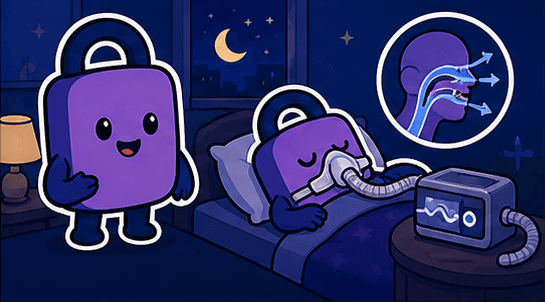
Have you ever felt like your breathing stopped during sleep? Has your partner witnessed you stop breathing while snoring? Sleep apnea is more common and dangerous than many people realize. With proper understanding and management, you can reclaim healthy sleep.
What is Sleep Apnea?
Sleep apnea is a sleep disorder characterized by repeated pauses or shallow breathing during sleep. Each apnea episode lasts at least 10 seconds, and in severe cases, can occur more than 30 times per hour.
This condition disrupts oxygen supply to the brain and body, causing various health problems. It's known to increase risks of high blood pressure, heart disease, diabetes, and stroke.
Key Point
Sleep apnea is not just snoring. It's a medical condition that can lead to serious health issues if left untreated.
Types of Sleep Apnea
Sleep apnea is divided into three main types:
Obstructive Sleep Apnea (OSA)
The most common type. It occurs when throat muscles relax and block the airway during sleep. This accounts for about 80% of all sleep apnea cases.
Central Sleep Apnea (CSA)
Occurs when the brain fails to send proper signals to breathing muscles. More common in patients with heart failure or stroke history.
Complex Sleep Apnea
A combination of obstructive and central sleep apnea. Requires specialized management due to treatment complexity.
Key Symptoms
If you experience these symptoms, you may have sleep apnea:
Loud Snoring
Snoring loud enough to be heard from another room, especially with gasping or choking sounds.
Witnessed Breathing Pauses
Partner or family member observes you stop breathing during sleep.
Sudden Awakenings
Waking up with a sensation of choking or gasping for air.
Morning Headaches
Frequent headaches in the morning due to oxygen deprivation.
Excessive Daytime Sleepiness
Feeling extremely tired during the day despite adequate sleep time.
Difficulty Concentrating
Decreased memory and concentration, easily irritable.
Risk Factors
These factors increase your risk of sleep apnea:
Overweight/Obesity
Fat deposits around the neck narrow the airway. Risk significantly increases with BMI of 30 or higher.
Neck Circumference
Neck circumference over 17 inches (43cm) in men or 15 inches (38cm) in women increases risk of airway obstruction.
Age
More common in people over 40, with risk increasing with age.
Family History
Having family members with sleep apnea increases your risk 2-4 times.
Alcohol and Sedatives
Alcohol and sleeping pills relax throat muscles, worsening airway obstruction.
Smoking
Causes inflammation and fluid retention in the upper airway, narrowing it.
Diagnosis Methods
Tests used to diagnose sleep apnea:
Polysomnography (PSG)
The most accurate test, measuring brain waves, eye movement, heart rate, breathing, and oxygen levels overnight at a sleep center.
Home Sleep Test
Monitors sleep at home with simplified equipment. Used for patients with suspected mild to moderate sleep apnea.
Apnea-Hypopnea Index (AHI)
Measures severity by counting apnea/hypopnea events per hour. 5-15 is mild, 15-30 is moderate, over 30 is severe.
Treatment Options
Sleep apnea can be treated through various methods:
CPAP Therapy
The most effective treatment. Delivers continuous air pressure through a mask to keep the airway open.
Oral Appliances
Mouthpiece-type devices that move the jaw forward to widen the airway. Effective for mild to moderate cases.
Positional Therapy
Sleeping on your side reduces gravity-induced airway collapse. Position-maintaining devices can help.
Surgery
Options include tonsillectomy, uvulopalatopharyngoplasty, and jaw surgery. Considered when anatomical causes are clear.
Weight Loss
For overweight individuals, losing just 10% of body weight can significantly improve symptoms.
Lifestyle Changes
These lifestyle changes help alongside treatment:
- 1Maintain a regular sleep schedule
- 2Avoid alcohol 4 hours before bedtime
- 3Avoid sleeping pills and sedatives
- 4Develop a habit of sleeping on your side
- 5Quit smoking
- 6Maintain a healthy weight
- 7Avoid overeating before bed
- 8Treat nasal congestion if present
Complications of Untreated Sleep Apnea
Leaving sleep apnea untreated can lead to these complications:
Cardiovascular Disease
Increased risk of high blood pressure, arrhythmia, heart failure, and heart attack.
Stroke
Severe sleep apnea patients have 2-3 times higher stroke risk.
Type 2 Diabetes
Increased insulin resistance raises diabetes risk.
Traffic Accidents
Daytime sleepiness increases traffic accident risk 2-7 times.
Mental Health
May be accompanied by depression, anxiety, and cognitive decline.
Early Detection and Treatment Matter
Sleep apnea symptoms can be effectively managed with proper treatment. If you snore loudly or seem to stop breathing during sleep, consult a specialist.
Good sleep is the foundation of a healthy life. Don't ignore your sleep quality, and actively seek testing and treatment if needed.
⚠️ Important Notice
This article is for informational purposes only and is not a substitute for professional medical advice, diagnosis, or treatment. If you suspect you have a sleep disorder or any health condition, please consult a doctor or sleep specialist.

Take the First Step to Better Sleep
Build healthy sleep habits with Good Night Lock.
Download Good Night LockRelated Articles
The Complete Guide to Insomnia: Causes, Symptoms, and Scientifically Proven Treatments
Do you find yourself staring at the ceiling every night, tossing and turning? Does it take you more than 30 minutes to fall asleep, or do you keep waking up in the early morning? Insomnia, experienced by 1 in 3 adults worldwide, isn't just about 'not being able to sleep.' Let's explore the scientific causes of insomnia through to evidence-based treatments.
Complete Guide to Narcolepsy: Symptoms, Causes, Diagnosis, and Treatment
Sudden overwhelming sleepiness, knees buckling while laughing... Narcolepsy isn't just 'being sleepy.' It's a neurological disorder caused by hypocretin deficiency. Learn everything about this condition that affects 1 in 2,000 people.
The Complete Guide to Snoring: Causes, Risks, and Solutions
Do you wake your partner every night with thunderous snoring? Or have you ever been startled awake by your own snoring? Snoring isn't just a noisy nuisance—it can be a signal of underlying health issues. About 40% of adults worldwide snore habitually, and some cases involve serious sleep apnea. Let's explore everything from the causes of snoring to effective treatments.
Orthosomnia: When Sleep Tracking Disrupts Your Sleep
Do you feel more anxious after checking your sleep score on your smartwatch? Has your pursuit of perfect sleep actually made it harder to sleep? This is 'Orthosomnia.' As sleep tracking devices become mainstream, we explore this modern sleep disorder that has emerged from our obsession with sleep data.
Awake Until Dawn? It Could Be Delayed Sleep Phase Syndrome (DSPS)
Do you try to fall asleep every night but can't until 2-3 AM, and then struggle terribly to wake up in the morning? If being a 'night owl' is seriously disrupting your daily life, you might have Delayed Sleep Phase Syndrome (DSPS).
Why Can't I Sleep? Understanding Insomnia and Sleep Disorders
Lying in bed but can't fall asleep? Does trying harder to sleep only make you feel more awake? Learn about the causes and solutions to this common problem faced by many modern people.