Sleepwalking Self-Diagnosis: Is Only Sleep Walking Considered Sleepwalking?
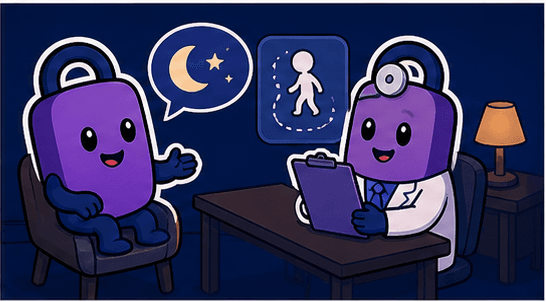
Do you walk around or do strange things while sleeping? Sleepwalking manifests in more forms than you might think. Learn about the various symptoms of sleepwalking beyond just walking, self-diagnosis methods, and appropriate coping strategies.
What is Sleepwalking?
Sleepwalking is a type of parasomnia where a person suddenly gets up and walks around or performs complex behaviors during deep sleep (non-REM sleep).
When It Occurs
Usually happens during deep sleep stage, 1-2 hours after falling asleep
Duration
Typically lasts a few minutes to 30 minutes
Memory Loss
Most people don't remember their actions the next morning
Prevalence
Affects 15-40% of children and 1-4% of adults
Sleepwalking Symptoms Beyond Walking
Sleepwalking isn't just about walking around. It includes various forms of abnormal sleep behaviors.
Sleep-Related Eating Disorder
Eating food or cooking while asleep. May find kitchen messy or experience weight gain in the morning
Sleep Talking
Speaking or mumbling while sleeping. Ranges from clear sentences to unintelligible sounds
Complex Sleep Behaviors
Performing complex actions like dressing/undressing, moving objects, or opening doors
Confusional Arousal
Showing disorientation, confusion, and slow responses when waking up from sleep
Sleep Terrors
Suddenly screaming and waking up but not remembering the next day. Also called night terrors
Sleepwalking Self-Diagnosis Checklist
Check if any of the following apply to you.
Family or partner has told you that you walked around while sleeping
You woke up in a strange place or far from your bed
There are signs of eating food while asleep
You have bruises or injuries that seem to be from bumping into things at night
You feel severe fatigue and not refreshed the next day
You experienced sleepwalking as a child
You've been experiencing sleep deprivation or irregular sleep patterns recently
You started taking new medications
Your stress or anxiety levels are high
There's a family history of sleepwalking
0-2 items: Low probability of sleepwalking
3-5 items: Possible sleepwalking, consultation with a sleep specialist recommended
6+ items: High probability of sleepwalking, professional diagnosis required
Causes of Sleepwalking
Sleepwalking can be triggered by various factors.
Sleep Deprivation
Not getting enough sleep makes incomplete arousal from deep sleep more likely
Irregular Sleep Schedule
Irregular sleep times can cause problems with sleep stage transitions
Stress and Anxiety
Mental stress can affect sleep quality and trigger sleepwalking
Genetic Factors
Having a family history increases the probability of sleepwalking by 10 times
Medications and Alcohol
Sleeping pills, sedatives, and alcohol can trigger sleepwalking
Other Sleep Disorders
Sleep apnea or restless leg syndrome can trigger sleepwalking
When Should You See a Doctor?
You should consult a sleep specialist in the following cases.
If you've injured yourself or others during sleepwalking
If it occurs multiple times a week
If you experience severe daytime sleepiness or fatigue
If sleepwalking started for the first time as an adult
If you leave the house or drive during sleepwalking episodes
Prevention and Management of Sleepwalking
Effective methods for preventing and managing sleepwalking.
Regular Sleep Schedule
Go to bed and wake up at the same time every day to stabilize your circadian rhythm
Adequate Sleep
Adults should ensure 7-9 hours of proper sleep
Create a Safe Environment
Remove sharp objects, lock windows and doors, install safety gates on stairs
Stress Management
Relax before bedtime with meditation, yoga, or deep breathing
Limit Caffeine and Alcohol
Avoid caffeine and alcohol especially in the evening
Keep a Sleep Diary
Track sleepwalking patterns by keeping a sleep diary
Precautions When Dealing with a Sleepwalker
Don't wake up a sleepwalking person - they may become more confused
Approach quietly and gently guide them back to bed
Don't make loud noises or act hastily
Only intervene carefully if they're about to do something unsafe
Calmly discuss the incident the next morning
Proper Understanding and Management of Sleepwalking is Important
Sleepwalking can manifest in various forms beyond just walking in sleep. It's important to recognize symptoms through self-diagnosis and seek professional help when needed.
Prevent sleepwalking through regular sleep habits and stress management, and protect yourself and your family by creating a safe sleep environment.
⚠️ Important Notice
This article is for informational purposes only and is not a substitute for professional medical advice, diagnosis, or treatment. If you suspect you have a sleep disorder or any health condition, please consult a doctor or sleep specialist.

Take the First Step to Better Sleep
Build healthy sleep habits with Good Night Lock.
Download Good Night LockRelated Articles
The Complete Guide to Insomnia: Causes, Symptoms, and Scientifically Proven Treatments
Do you find yourself staring at the ceiling every night, tossing and turning? Does it take you more than 30 minutes to fall asleep, or do you keep waking up in the early morning? Insomnia, experienced by 1 in 3 adults worldwide, isn't just about 'not being able to sleep.' Let's explore the scientific causes of insomnia through to evidence-based treatments.
Complete Guide to Narcolepsy: Symptoms, Causes, Diagnosis, and Treatment
Sudden overwhelming sleepiness, knees buckling while laughing... Narcolepsy isn't just 'being sleepy.' It's a neurological disorder caused by hypocretin deficiency. Learn everything about this condition that affects 1 in 2,000 people.
The Complete Guide to Snoring: Causes, Risks, and Solutions
Do you wake your partner every night with thunderous snoring? Or have you ever been startled awake by your own snoring? Snoring isn't just a noisy nuisance—it can be a signal of underlying health issues. About 40% of adults worldwide snore habitually, and some cases involve serious sleep apnea. Let's explore everything from the causes of snoring to effective treatments.
Orthosomnia: When Sleep Tracking Disrupts Your Sleep
Do you feel more anxious after checking your sleep score on your smartwatch? Has your pursuit of perfect sleep actually made it harder to sleep? This is 'Orthosomnia.' As sleep tracking devices become mainstream, we explore this modern sleep disorder that has emerged from our obsession with sleep data.
Awake Until Dawn? It Could Be Delayed Sleep Phase Syndrome (DSPS)
Do you try to fall asleep every night but can't until 2-3 AM, and then struggle terribly to wake up in the morning? If being a 'night owl' is seriously disrupting your daily life, you might have Delayed Sleep Phase Syndrome (DSPS).
Why Can't I Sleep? Understanding Insomnia and Sleep Disorders
Lying in bed but can't fall asleep? Does trying harder to sleep only make you feel more awake? Learn about the causes and solutions to this common problem faced by many modern people.