Eye Floaters and Sleep: What Those Mysterious Spots Really Mean
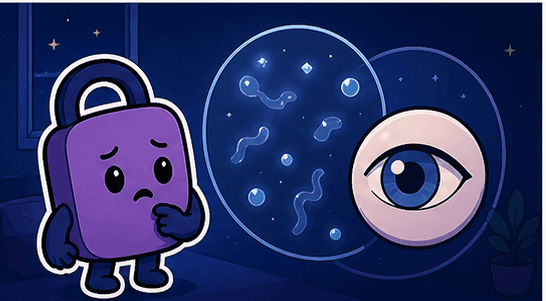
You've seen them: those strange spots, threads, or cobwebs that drift across your vision, especially when you look at bright backgrounds. Eye floaters are harmless for most people, but many notice them more when they're tired or sleep-deprived. What's the connection between floaters and sleep, and should you worry about them?
What Are Eye Floaters?
Eye floaters are tiny clumps of cells or gel that form inside the vitreous—the clear, jelly-like substance that fills the inside of your eye. These clumps cast shadows on your retina, which you perceive as floating shapes in your vision.
Floaters commonly appear as:
- Small dots or specks
- Wavy lines or threads
- Cobweb-like shapes
- Ring-shaped or circular spots
- Cloud-like shadows
They move when you move your eyes and seem to dart away when you try to look at them directly. This is because they're floating in the fluid of your eye and follow your eye movements with a slight lag.
Good News:
For most people, floaters are completely harmless and just a natural part of aging. They're annoying but not dangerous.
The Sleep Connection: Why Floaters Seem Worse When You're Tired
Many people report noticing their floaters more when they're sleep-deprived. While floaters themselves don't increase with lack of sleep, several factors make them more noticeable:
Increased Attention and Anxiety
Sleep deprivation reduces your ability to filter out irrelevant sensory information. You become hyperaware of minor stimuli, including floaters you'd normally ignore.
Eye Strain and Fatigue
Tired eyes are strained eyes. When you're exhausted, your eyes work harder to focus, making you more conscious of visual disturbances like floaters.
Dry Eyes
Sleep deprivation reduces tear production and blink rate, causing dry eyes. Dry eyes can create additional visual disturbances and make existing floaters more prominent.
Pupil Dilation
Bright light exposure while sleep-deprived (like screens at night) can affect pupil size, changing how shadows from floaters appear on your retina.
Stress and Fixation
Lack of sleep increases stress and anxiety, which can lead to fixating on bodily sensations and health worries, making you obsess over floaters.
When to Worry: Serious vs. Harmless Floaters
While most floaters are benign, sudden changes can indicate serious eye problems. Seek immediate medical attention if you experience:
- Sudden onset of many new floaters
- Flashes of light in your peripheral vision
- A dark curtain or shadow moving across your vision
- Sudden blurry vision or vision loss
- Eye pain accompanying new floaters
- Floaters after eye injury or surgery
These symptoms could indicate:
Retinal Detachment
A medical emergency where the retina pulls away from the back of the eye. Requires immediate surgery to prevent permanent vision loss.
Vitreous Hemorrhage
Bleeding into the vitreous gel, often from diabetic retinopathy or torn blood vessels.
Posterior Vitreous Detachment (PVD)
Usually benign but needs checking to ensure no retinal tears occurred. Common as people age.
If your floaters are long-standing, unchanged, and not accompanied by other symptoms, they're almost certainly harmless. Still, mention them at your next eye exam.
Can Better Sleep Reduce Floaters?
Sleep won't make existing floaters disappear—they're physical objects in your eye. However, good sleep hygiene can make them less noticeable and bothersome:
Get Adequate Sleep
7-9 hours per night reduces eye strain and the hyperawareness that makes floaters seem worse.
Follow the 20-20-20 Rule
Every 20 minutes, look at something 20 feet away for 20 seconds. This reduces eye strain from screens and close work.
Stay Hydrated
Dehydration affects eye moisture. Drink plenty of water throughout the day to maintain healthy tear production.
Use Artificial Tears
If you have dry eyes, lubricating eye drops can reduce irritation that makes you focus on floaters.
Manage Stress
Stress and anxiety amplify awareness of floaters. Meditation, exercise, and good sleep all help reduce stress.
Avoid Bright Screens Before Bed
Blue light exposure late at night disrupts sleep and strains eyes, potentially increasing floater awareness.
Living with Floaters: Practical Coping Strategies
If you have persistent floaters that bother you, these strategies can help:
- Move your eyes up and down to shift floaters out of your central vision
- Wear sunglasses in bright light—floaters are more visible against bright backgrounds
- Adjust screen brightness to reduce contrast that makes floaters stand out
- Practice acceptance—the brain naturally learns to ignore floaters over time
- Avoid fixating on them—the more you look for floaters, the more you'll notice them
- Maintain good overall eye health with regular exams and UV protection
Most people's brains adapt to floaters within a few months through a process called neuroadaptation. Your visual system learns to filter them out, making them virtually invisible most of the time.
In rare cases where floaters severely impact quality of life, medical interventions exist (vitrectomy or laser vitreolysis), but these carry risks and are typically reserved for extreme cases.
Floaters Are Normal—Don't Lose Sleep Over Them
Eye floaters are a common, usually harmless phenomenon that affects most people at some point. While they can be annoying, especially when you're tired, they rarely indicate anything serious.
The connection between sleep and floaters is mostly about perception—lack of sleep makes you more aware of them, not creates more of them. By maintaining good sleep habits, managing stress, and avoiding eye strain, you can minimize how much floaters bother you.
Remember: if you notice sudden changes in floaters, flashes of light, or vision loss, see an eye doctor immediately. Otherwise, try to relax and let your brain do what it does best—adapt and filter out irrelevant visual noise.
⚠️ Important Notice
This article is for informational purposes only and is not a substitute for professional medical advice, diagnosis, or treatment. If you suspect you have a sleep disorder or any health condition, please consult a doctor or sleep specialist.

Take the First Step to Better Sleep
Build healthy sleep habits with Good Night Lock.
Download Good Night LockRelated Articles
Why Is It So Hard to Wake Up in the Morning? Understanding Sleep Inertia
Do you find yourself hitting the snooze button multiple times every morning? Feel like you need an extra hour of sleep no matter how long you slept? You're experiencing sleep inertia - a fascinating phenomenon that affects millions of people worldwide.
Why Alcohol Disrupts Your Sleep (Even Though It Makes You Drowsy)
After a drink or two, you might feel relaxed and sleepy—perfect for bedtime, right? Not quite. While alcohol can make you drowsy initially, it actually sabotages your sleep quality in ways that leave you feeling tired the next day. Let's uncover the science behind alcohol's complex relationship with sleep.
The Napoleon Sleep Method: The Truth About 4-Hour Sleep
Have you heard the story about Napoleon, the great conqueror, who exercised powerful leadership while sleeping only 4 hours a day? Is this sleep method really effective? And did Napoleon actually use this method?
Why Do We Dream So Often? The Science Behind Frequent Dreams
Why do we have vivid dreams on some nights while remembering nothing on others? Let's explore the science of dreams to understand why we dream and how we can enjoy more restful nights.
The Science of Pulling an All-Nighter: How 24 Hours Without Sleep Affects Your Body and Brain
Cramming for an exam, racing against a project deadline, or staying up all night with friends—we've all been there. But what actually happens to your body and brain when you go a full 24 hours without sleep? Let's explore the science behind all-nighters and learn how to handle them when they're truly unavoidable.
Melatonin Side Effects: What to Know About 5mg & 10mg Doses
Melatonin is a natural hormone and popular sleep aid that helps millions get better rest. However, different dosages can come with various side effects. Let's explore how melatonin works, what side effects to watch for at different doses, and how to use it safely.